Quotessence
Home / Quotes / Quote by Kenneth Clark

Quote by Kenneth Clark

Work

The nude: a study in ideal form

This book delves into the representation of the nude figure in various artistic contexts, analyzing its role as an ideal form in visual arts and its significance in the history of art. more

Author
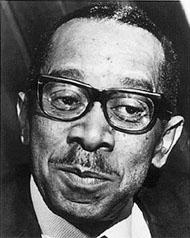
Kenneth Clark
Kenneth Clark

Kenneth Clark was a renowned psychologist, born on July 24, 1914, and passed away on May 1, 2005. He made significant contributions to the field of psychology, particularly in the areas of cognitive psychology and child psychology. more

You May Also Like

“The nude gains its enduring value from the fact that it reconciles several contrary states. It takes the most sensual and immediately interesting object, the human body, and puts it out of reach of time and desire; it takes the most purely rational concept of which mankind is capable, mathematical order, and makes it a delight to the senses; and it takes the vague fears of the unknown and sweetens them by showing that the gods are like men and may be worshiped for their life-giving beauty rather than their death-dealing powers.”

“Antique art has come down to us in a fragmentary condition, and we have virtuously adapted our taste to this necessity. Almost all our favorite specimens of Greek sculpture, from the sixth century onward, were originally parts of compositions, and if we were faced with the complete group in which the Charioteer of Delphi was once a subsidiary figure, we might well experience a moment of revulsion. We have come to think of the fragment as more vivid, more concentrated, and more authentic.”

“Ruskin's much-derided moral theory of art was part of an attempt to show that this human activity, which we value so highly, engaged the whole of human personality. His insistence on the sanctity of nature was part of an attempt to develop Goethe's intuition that form cannot be put together in the mind by an additive process, but is to be deduced from the laws of growth in living organisms, and their resistance to the elements.”

“Great works of art can be produced in barbarous societies - in fact the very narrowness of primitive society gives their ornamental art a peculiar concentration and vitality. At some time in the ninth century one could have looked down the Seine and seen the prow of a Viking ship coming up the river. Looked at today in the British Museum, it is a powerful work of art; but to the mother of a family trying to settle down in her little hut, it would have seemed less agreeable - as menacing to her civilisation as the periscope of a nuclear submarine.”

“However much the various phases of the French Revolution may have modelled themselves on Roman history the early phase on Republican virtue, the later on Imperial grandeur the fact remains that classicism depended on a fixed and rational philosophy; whereas the spirit of the Revolution was one of change and of emotion.”

“This became Delacroix 's theme: that the achievements of the spirit all that a great library contained were the result of a state of society so delicately balanced that at the least touch they would be crushed beneath an avalanche of pent-up animal forces.”