“If you believe that a nation is really better off which achieves for a comparative few, those who are capable of attaining it, high culture, ease, opportunity, and that these few from their enlightenment should give what they consider best to those less favored, then you naturally belong to the Republican Party. But if you believe that people must struggle slowly to the light for themselves, then it seems to me that you are a Democrat.”
Quote by Eleanor Roosevelt
Author
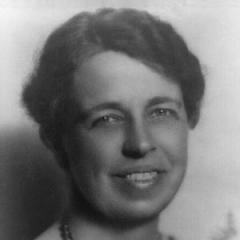
Eleanor Roosevelt
Former First Lady of the United States, political activist, and author. Eleanor Roosevelt is renowned for her exceptional social activism and contributions to civil rights. She served as the First Lady during her husband Franklin D. Roosevelt's presidency and continued to be actively involved in political and social affairs after his death. more
You May Also Like
Source: A Theologico-Political Treatise
“The order and connection of ideas is the same as the order and connection of things.”
Source: Ethics: with The Treatise on the Emendation of the Intellect and Selected Letters
Source: Ethics
“All human things do require to have an ideal in them; to have some soul in them.”
Source: Past and Present
“No mortal has a right to wag his tongue, much less to wag his pen, without saying something.”
Source: Works