Quotessence
Home / Quotes / Quote by Chinua Achebe

Quote by Chinua Achebe

Work

Things Fall Apart

This classic novel delves into the cultural and social changes experienced by an Igbo village in Nigeria as it grapples with the arrival of British colonizers. The story follows the protagonist Okonkwo, a strong and proud warrior, and his struggle to maintain his traditional values in the face of Western influence. more
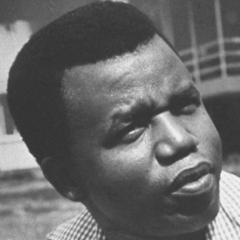
Author

Chinua Achebe
Chinua Achebe

Nigerian novelist, poet, literary critic, widely regarded as one of the greatest African writers of the 20th century. Chinua Achebe is known for his profound insights into colonialism and African culture, with works such as 'Things Fall Apart' and 'Arrow of God'. more

You May Also Like

“I think there are two types of writers, the architects and the gardeners. The architects plan everything ahead of time, like an architect building a house. They know how many rooms are going to be in the house, what kind of roof they're going to have, where the wires are going to run, what kind of plumbing there's going to be. They have the whole thing designed and blueprinted out before they even nail the first board up. The gardeners dig a hole, drop in a seed and water it. They kind of know what seed it is, they know if planted a fantasy seed or mystery seed or whatever. But as the plant comes up and they water it, they don't know how many branches it's going to have, they find out as it grows. And I'm much more a gardener than an architect.”

“He only moved to his own impulses, leaving his wife a cold, lonely and withered woman. This bothered Clarita for years -- how her father treated her mother with a lack of emotion, of connection. Santos never beat her mother, but he would give her a devastating look that caused her to wilt like a water-starved flower. Clarita recalled how as a little girl, she hid away in her room, beneath blankets surrounded by dirt-caked dolls, distressed that Santos would come in and destroy her with such a look.”

“Am I in the wrong place here, or in the wrong life? Did I not recognize, as I sat in a train that raced past a station and did not stop, that I was on the wrong train, and did I not learn from the conductor that the train would not stop at the next station, either, a hundred kilometers away, and did he not also admit to me, whispering with his hand shielding his mouth, that the train would not stop again at all?”

“Ich las die Übersetzung des Piaveschen Librettos zu Ernani, herausgegeben in Zürich 1952, und im Vorwort steht in atemberaubender Dummheit, man habe die krassesten Unglaubwürdigkeiten ausgemerzt, wo doch gerade das Unfaßbare das Schöne an der Geschichte ist, oder besser: an der Gattung Oper an sich, weil gerade was von keiner auch noch so exotischen Wahrscheinlichkeitsrechnung mehr erfaßbar ist, in der Oper zu einer machtvollen Verwandlung der ganzen Welt in Musik als das Natürliche erscheint. Auch die großen Gefühle der Oper, die oft als übersteigert abgetan werden, kommen mir eher in die Gegenrichtung aufs äußerste reduziert vor, auf das Archetypische der Gefühle verdichtet, nicht mehr weiter in ihrer Essenz konzentrierbar. Es sind Axiome von Gefühlen. Das ist es, was Oper und Dschungel verbindet.”

“I remembered the moment I read a novel for the first time. The texture of the soft paper touching my fingertips. The black letters blooming on a white field. The texture of the page I folded with my hands. 「 It isn’t important to read the letters. The important thing is where the letters lead you. 」 My mother, who loved books, used to say this. At least for me, it wasn’t just a saying. The gaps in the black print. My own little snow garden lay in between the letters. This space, which was too small for someone to go into, was a perfect place for a child who liked to hide. Every time a pleasant sound was heard, the letters stacked up like snow. In it, I became a hero. I had adventures, loved and dreamt. Thus, I read, read and read again. I remembered the first time I was about to finish a book. It was like being deprived of the world. The protagonist and supporting characters walked off with the sentence ‘They lived happily ever after’ and I was left alone at the end of the story. In my vanity and sense of betrayal, my young self struggled because I couldn’t stand the loneliness. 「This… is the end? 」 Perhaps it was similar to learning about death. For the first time, I realized that something was finite.”