Quotessence
Home / Quotes / Quote by Ray Bradbury

Quote by Ray Bradbury

“Après tout, on vit à l'époque des Kleenex. On fait avec les gens comme avec les mouchoirs, on froisse après usage, on jette, on en prend un autre, on se mouche, on froisse, on jette. Tout le monde se sert des basques du voisin.”

Quote by Ray Bradbury

Work

Fahrenheit 451

Ray Bradbury's Fahrenheit 451 is a thought-provoking novel set in a future society where books are banned and firemen are employed to burn any that are found. The story follows a fireman named Guy Montag who begins to question the status quo and the role of literature in society. more
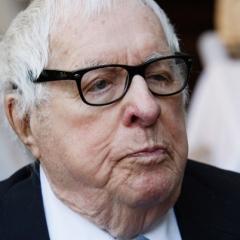
Author

Ray Bradbury
Ray Bradbury

Ray Bradbury, born on August 22, 1920, and died on June 5, 2012, was an influential American science fiction writer, playwright, and poet. His works are known for their unique imagination and profound philosophical insights, which have had a profound impact on the science fiction genre. more

You May Also Like

“Aimer un esprit, voilà le véritable martyre. Le désespoir incarné. Le nom de Donna ne serait imprimé sur aucune page, il n'apparaîtrait nulle part dans les annales de l'humanité. Disparue sans laisser d'adresse. Il y a des filles comme ça, et c'est celles-là qu'on aime le plus, celles qui ne permettent pas d'espérer, car elles vous échappent alors même que vous refermer vos bras autour d'elles.”

“Imagine un peu : tu es conscient, mais pas vivant. Tu vois et même tu comprends, mais tu ne vis pas. Tu as le nez collé au carreau. Tu reconnais les choses, mais ça ne fait pas de toi un vivant. On peut mourir et durer encore. Parfois, ce qui t'observe derrière les yeux de quelqu'un est mort dans l'enfance. C'est mort et c'est là, et ça regarde toujours. Ce n'est pas simplement le corps, sans rien dedans, qui te regarde ; non, il y a encore quelque chose à l'intérieur qui est mort depuis longtemps mais continue à regarder au-dehors, et regarde et regarde encore sans pouvoir s'arrêter.”

“The past may or may not be a foreign country. It may morph or lie still, but its capital is always Regret, and what flushes through it is the grand canal of unfledged desires that feed into an archipelago of tiny might-have-beens that never really happened but aren't unreal for not happening and might still happen though we fear they never will. And I thought of Ole Brit holding back so much, as we all do when we look back to see that the roads we've left behind or not taken have all but vanished. Regret is how we hope to back into our real lives once we find the will, the blind drive and courage, to trade in the life we're given for the life that bears our name and ours only. Regret is how we look forward to things we've long lost yet never really had. Regret is hope without conviction, I said. We're torn between regret, which is the price to pay for things not done, and remorse, which is the cost for having done them. Between one and the other, time plays all its cozy little tricks.”