Quotessence
Home / Quotes / Quote by Salvador de Madariaga

Quote by Salvador de Madariaga

“The three creative prototypes, the scientist, the artist, and the saint, know instinctively, without the help of any mere philosopher, that each must obey an absolute rule of conduct. Three words established and hallowed by usage express the divinities, the values, the supreme aims served respectively by these three kinds of men with an undivided loyalty: truth for the scientist; beauty for the artist; goodness for the saint. The discussion on what these words mean will never end. We must be content with taking note of their clarity as symbols, and of the singular force which animates them and makes of them powerful poles of attraction.”

Quote by Salvador de Madariaga

Work

Essays with a Purpose

This book compiles a series of essays that delve into diverse subjects, offering insights and perspectives on life, society, and personal growth. more

Author
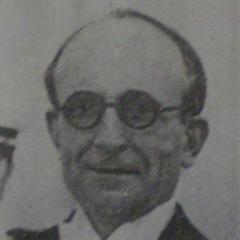
Salvador de Madariaga

Salvador de Madariaga, born on July 23, 1886, and died on December 14, 1978, was a prominent Spanish politician, diplomat, writer, and critic. He is one of the most important political figures of the 20th century in Spain, renowned for his diplomatic skills and literary achievements. more

You May Also Like

“Anyone who loves books the way Homer does, loves libraries, too. It doesn't matter if the library has fancy red leather chairs and gold-plated shelves that reach to a vaulted ceiling, or if the library has splintery wooden benches and shelves made of old milk crates. it's the scent that sets the book lover at ease. It's better than grandma's perfume, or freshly baked chocolate chip cookies, or even toast. It's a scent derived from paper, mildew, dust, and human endeavors.”

“The first thing they do to you when you go into New-Path," Charles Freck said, "is they cut off your pecker. As an object lesson. And then they fan out in all directions from there." "Your spleen next," Barris said. "They what, they cut -- What does that do, a spleen?" "Helps you digest your food." "How?" "By removing the cellulose from it." "Then I guess after that --" "Just noncellulose foods. No leaves or alfalfa." "How long can you live that way?" Barris said, "It depends on your attitude." "How many spleens does the average person have?" He knew there usually were two kidneys. "Depends on his weight and age." "Why?" Charles Freck felt keen suspicion. "A person grows more spleens over the years. By the time he's eighty --" "You're shitting me.”

“Do you realize,' Dr. Ramzi says, smiling broadly, 'when you speak of a political programme, that your programme now is the same that Mahmoud Sami Al-Baroudi's government tried to establish more than a hundred years ago?' 'Is that right?' Isabel says. 'Yes. Yes, for sure,' Dr. Ramzi says. 'Listen: the ending of foreign influence, the payment of the Egyptian debt -' he counts them off on his fingers - 'an elected parliament, a national industry, equality of all men before the law, reform of education, and allowing a free press to reflect all shades of opinion. Those were the seven points of their programme. These young people -' the wave of his hand takes in the group - 'they still ask for this.' He shrugs.”

“The idea that this end of philosophy— at least, of political philosophy and (I claim) moral philosophy— has close relations with history overlaps with a more ambitious view held by a consistently underestimated Oxford philosopher, R. G. Collingwood. The trouble with Collingwood’s kind of commitment is that it requires one to know some history. My two associates in the view I am sketching are Alasdair MacIntyre and Charles Taylor. They are both Roman Catholics, though of different sorts. I used to find this a disquieting fact but no longer do so. All three of us, I could say, accept the significant role of Christianity in understanding modern moral consciousness, and adopt respectively the three possible views about how to move in relation to that: backward in it, forward in it, and out of it. In any case, we all assume some historical commitments, they on a more ambitious scale than I, and perhaps there is a rather nervous competition for who writes the most irresponsible history.”