Quotessence
Home / Quotes / Quote by Marjory Stephenson

Quote by Marjory Stephenson

“Perhaps bacteria may tentatively be regarded as biochemical experiments; owing to their relatively small size and rapid growth, variations must arise much more frequently than in more differentiated forms of life, and they can in addition afford to occupy more precarious positions in natural economy than larger organisms with more exacting requirements.”

Quote by Marjory Stephenson

Author
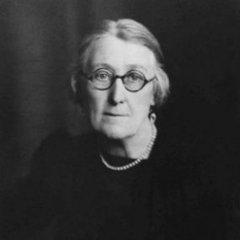
Marjory Stephenson
Marjory Stephenson

Marjory Stephenson was a historical figure of an unknown profession/category. She was born on January 24, 1885, and passed away on December 12, 1948. more

You May Also Like

“[In research on bacteria metabolism] we have indeed much the same position as an observer trying to gain an idea of the life of a household by careful scrutiny of the persons and material arriving or leaving the house; we keep accurate records of the foods and commodities left at the door and patiently examine the contents of the dust-bin and endeavour to deduce from such data the events occurring within the closed doors.”

“All the more recent work on alkaptonuria has... strengthened the belief that the homogentisic acid excreted is derived from tyrosin, but why alkaptonuric individuals pass the benzene ring of their tyrosin unbroken and how and where the peculiar chemical change from tyrosin to homogentisic acid is brought about, remain unsolved problems.”

“As a progressive discipline [biochemistry] belongs to the present century. From the experimental physiologists of the last century it obtained a charter, and, from a few pioneers of its own, a promise of success; but for the furtherance of its essential aim that century left it but a small inheritance of facts and methods. By its essential or ultimate aim I myself mean an adequate and acceptable description of molecular dynamics in living cells and tissues.”

“For it is not cell nuclei, not even individual chromosomes, but certain parts of certain chromosomes from certain cells that must be isolated and collected in enormous quantities for analysis; that would be the precondition for placing the chemist in such a position as would allow him to analyse [the hereditary material] more minutely than [can] the morphologists ... For the morphology of the nucleus has reference at the very least to the gearing of the clock, but at best the chemistry of the nucleus refers only to the metal from which the gears are formed.”

“If the juices of the body were more chymically examined, especially by a naturalist, that knows the ways of making fixed bodies volatile, and volatile fixed, and knows the power of the open air in promoting the former of those operations; it is not improbable, that both many things relating to the nature of the humours, and to the ways of sweetening, actuating, and otherwise altering them, may be detected, and the importance of such discoveries may be discerned.”

“In trying to evaluate Hopkins' unique contribution to biochemistry it may perhaps be said that he alone amongst his contemporaries succeeded in formulating the subject. Among others whose several achievements in their own fields may have surpassed his, no one has ever attempted to unify and correlate biochemical knowledge so as to form a comprehensible picture of the cell and its relation to life, reproduction and function.”