Quotessence
Home / Quotes / Quote by Frederick Gowland Hopkins

Quote by Frederick Gowland Hopkins

“As a progressive discipline [biochemistry] belongs to the present century. From the experimental physiologists of the last century it obtained a charter, and, from a few pioneers of its own, a promise of success; but for the furtherance of its essential aim that century left it but a small inheritance of facts and methods. By its essential or ultimate aim I myself mean an adequate and acceptable description of molecular dynamics in living cells and tissues.”

Quote by Frederick Gowland Hopkins

Author
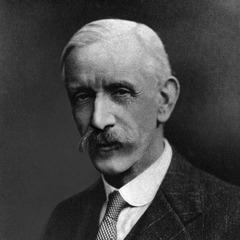
Frederick Gowland Hopkins

Frederick Gowland Hopkins was a British biochemist renowned for his contributions to nutrition and biochemistry. He was awarded the Nobel Prize in Physiology or Medicine in 1932 for his discovery of vitamins. more

You May Also Like

“For it is not cell nuclei, not even individual chromosomes, but certain parts of certain chromosomes from certain cells that must be isolated and collected in enormous quantities for analysis; that would be the precondition for placing the chemist in such a position as would allow him to analyse [the hereditary material] more minutely than [can] the morphologists ... For the morphology of the nucleus has reference at the very least to the gearing of the clock, but at best the chemistry of the nucleus refers only to the metal from which the gears are formed.”

“If the juices of the body were more chymically examined, especially by a naturalist, that knows the ways of making fixed bodies volatile, and volatile fixed, and knows the power of the open air in promoting the former of those operations; it is not improbable, that both many things relating to the nature of the humours, and to the ways of sweetening, actuating, and otherwise altering them, may be detected, and the importance of such discoveries may be discerned.”

“In trying to evaluate Hopkins' unique contribution to biochemistry it may perhaps be said that he alone amongst his contemporaries succeeded in formulating the subject. Among others whose several achievements in their own fields may have surpassed his, no one has ever attempted to unify and correlate biochemical knowledge so as to form a comprehensible picture of the cell and its relation to life, reproduction and function.”

“My main thesis will be that in the study of the intermediate processes of metabolism we have to deal not with complex substances which elude ordinary chemical methods, but with the simple substances undergoing comprehensible reactions... I intend also to emphasise the fact that it is not alone with the separation and identification of products from the animal that our present studies deal; but with their reactions in the body; with the dynamic side of biochemical phenomena.”

“The mechanist is intimately convinced that a precise knowledge of the chemical constitution, structure, and properties of the various organelles of a cell will solve biological problems. This will come in a few centuries. For the time being, the biologist has to face such concepts as orienting forces or morphogenetic fields. Owing to the scarcity of chemical data and to the complexity of life, and despite the progresses of biochemistry, the biologist is still threatened with vertigo.”