Quotessence
Home / Quotes / Quote by Russell Sherman

Quote by Russell Sherman

“As artists, are we quasi psychiatrists who mend the soul? Do we provide the consolations, escapes, and reassurances which enable us to survive? Or are we reporters of the truth, assembling the multiple shards of reality into intricate portraits which seek out the connections between misery and blessing, violence and wisdom? Do we protect or investigate the heart?”

Quote by Russell Sherman

Author
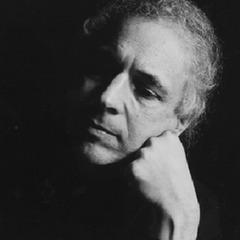
Russell Sherman
Russell Sherman

Russell Sherman is an esteemed classical pianist born in 1930. His musical career is marked by a rich array of experiences and a wide range of repertoire, renowned for his exquisite technique and profound understanding of music. more

You May Also Like

“Without silence there is no music. Not simply because the faculty of hearing deteriorates from constant exposure to noise, but because silence is both the majestic frame and the stable solution for musical (and poetic) ideas. Silence is the soda water, the bracing ether, the bridge and mode of respect for receiving instructions from the angel.”

“When we play music we describe the echo the tableau of natural forms, their shapes and arrangements, as uncovered by the composer's imagination, which yet must be filtered through our own. There is no other way. And in acknowledging this tableau, this revelation, we must "hesitate", we must doubt, as the composer doubted, for no valid creation can issue unscarred by doubt, by that vast flux of wonder which precedes the construction of being.”

“Art is a process of concentration. It is both the distilled essence and the commentary upon otherwise mundane activities and reflections. Musical notes must be charged, must gather more than one and the surface meaning, must reveal audible and "inaudible" connections to other notes, patterns, and meaning, either by way of affinity or contrast.”

“For time not only moves inexorable forward, as the underlying grid to our personal chronicle, but is manipulated by our psychic needs and natures into various images of timelessness and timeliness. Transient moments suddenly expand, visions of infinity intervene, notes and phrases become outlets of fantasy, escape, recollection, or omen. The music travels on two planes, chronological time and psychological time. Both planes are essential and must be abundantly represented.”