Quotessence
Home / Quotes / Quote by Milan Kundera

Quote by Milan Kundera

“given the nature of the human couple, the love of a man and a woman is a priori inferior to that which can exist (at least in the best instances) in the love between man and dog...It is a completely selfless love.”

Quote by Milan Kundera

Author
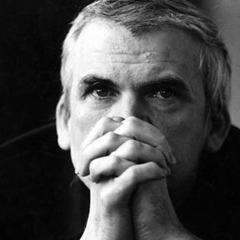
Milan Kundera
Milan Kundera

Milan Kundera is a renowned Czech-French writer known for his profound psychological insights and unique narrative techniques. His works often explore themes of personal freedom, love, morality, and existentialism, with notable titles including 'The Unbearable Lightness of Being' and 'The Joke'. more

You May Also Like

“Thomas swallowed, wondering how he could ever go out there. His desire to become a Runner had taken a major blow. But he had to do it. Somehow he KNEW he had to do it. It was such an odd thing to feel, especially after what he'd just seen... Thomas knew he was a smart kid- he somehow felt it in his bones. But nothing about this place made any sense. Except for one thing. He was supposed to be a Runner. Why did he feel that so strongly? And even now, after seeing what lived in the maze?”

“Oh, for heaven’s sake, Sirius, Dumbledore said no!” A bearlike black dog had appeared at Harry’s side as Harry clambered over the various trunks cluttering the hall to get to Mrs. Weasley. “Oh honestly,” said Mrs. Weasley despairingly. “Well, on your own head be it!” The great black dog gave a joyful bark and gamboled around them, snapping at pigeons, and chasing its own tail. Harry couldn’t help laughing. Sirius had been trapped inside for a very long time.”

“Human knowledge is not (or does not follow) a straight line, but a curve, which endlessly approximates a series of circles, a spiral. Any fragment, segment, section of this curve can be transformed (transformed one-sidedly) into an independent, complete, straight line, which then (if one does not see the wood for the trees) leads into the quagmire, into clerical obscurantism (where it is anchored by the class interests of the ruling classes).”

“We are born haunted, he said, his voice weak, but still clear. Haunted by our fathers and mothers and daughters, and by people we don't remember. We are haunted by otherness, by the path not taken, by the life unlived. We are haunted by the changing winds and the ebbing tides of history. And even as our own flame burns brightest, we are haunted by the embers of the first dying fire. But mostly, said Lord Jim, we are haunted by ourselves.”