Quotessence
Home / Quotes / Quote by Felix Adler

Quote by Felix Adler

“It may be impossible for a man by merely willing it to add wings to his body, but it is possible for any man, by merely willing it, to add wings to his soul. This perennial miracle of the moral nature is capable of happening at any time.”

Quote by Felix Adler

Work

Life and destiny

This comprehensive work delves into the philosophical and existential aspects of life, examining the complex interplay between personal choices, societal influences, and the broader forces that govern human destiny. more

Author

Felix Adler
Felix Adler

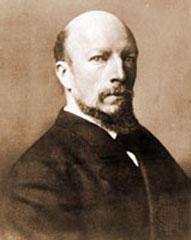
Felix Adler, born on August 13, 1851 in Germany and died on April 24, 1933 in the United States, was an American sociologist and philosopher, known as a pioneer of the American social service movement. He is renowned for his contributions to charity, social justice, and human welfare. more

You May Also Like

“It is written that the last enemy to be vanquished is death. We should begin early in life to vanquish this enemy by obliterating every trace of the fear of death from our minds. Then can we turn to life and fill the whole horizon of our souls with it, turn with added zest to all the serious tasks which it imposes and to the pure delights which here and there it affords.”

“When the light of the sun shines through a prism it is broken into beautiful colours, and when the prism is shattered, still the light remains. So does the life of life shine resplendent in the forms of our friends, and so, when their forms are broken, still their life remains; and in that life we are united with them; for the life of their life is also our life, and we are one with them by ties indissoluble.”

“Ethical religion affirms the continuity of progress toward moral perfection. It affirms that the spiritual development of the human race cannot be prematurely cut off, either gradually or suddenly; that every stone of offence against which we stumble is a stepping-stone to some greater good; that, at the end of days, if we choose to put it so, or, rather, in some sphere beyond the world of space and time, all the rays of progress will be summed and centred in a transcendent focus.”

“We should seek to free the moral life from the embarrassments and entanglements in which it has been involved by the quibbles of the schools and the mutual antagonisms of the sects; to introduce into it an element of downrightness and practical earnestness; above all, to secure to the modern world, in its struggle with manifold evil, the boon of moral unity, despite intellectual diversity.”

“I believe in the supreme excellence of righteousness; I believe that the law of righteousness will triumph in the universe over all evil; I believe that in the attempt to fulfil the law of righteousness, however imperfect it must remain, are to be found the inspiration, the consolation, and the sanctification of human existence. We live in order to finish an, as yet, unfinished universe, unfinished so far as the human, that is, the highest part of it, is concerned. We live in order to develop the superior qualities of man which are, as yet, for the most part latent.”