Quotessence
Home / Quotes / Quote by Robert McKee

Quote by Robert McKee

“Of the total creative effort represented in a finished work, 75 percent or more of a writer's labor goes into designing the story designing story tests the maturity and insight of the writer, his knowledge of society, nature, and the human heart. Story demands both vivid imagination and powerful analytic thought.”

Quote by Robert McKee

Author
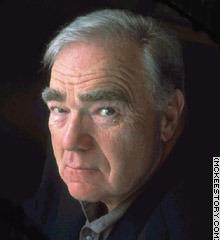
Robert McKee
Robert McKee

Robert McKee (born 1941) is an American author, lecturer, and story consultant, best known for his teachings on narrative structure and screenwriting. He is the author of the influential book "Story: Substance, Structure, Style, and the Principles of Screenwriting" (1997), which has become a standard reference for writers worldwide. McKee founded the "Story Seminar," a workshop series that has been attended by over 100,000 participants globally, including filmmakers, novelists, and business professionals. His work emphasizes the importance of character development, emotional engagement, and structural coherence in storytelling. Despite some criticism for being formulaic, McKee is widely regarded as a pivotal figure in modern narrative theory, with his principles applied across film, television, literature, and corporate communication. more

You May Also Like

“Action is hope. At the end of each day, when you've done your work, you lie there and think, Well, I'll be damned, I did this today. It doesn't matter how good it is, or how bad-you did it. At the end of the week you'll have a certain amount of accumulation. At the end of a year, you look back and say, I'll be damned, it's been a good year.”

“You have to understand that people feel threatened by a writer. It's very curious. He knows something they don't know. He knows how to write, and that's a subtle, disturbing quality he has. Some directors without even knowing it, resent the writer in the same way Bob Hope might resent the fact he ain't funny without twelve guys writing the jokes. The director knows the script he is carrying around on the set every day was written by someone, and that's just not something that all directors easily digest.”

“You have to be very productive in order to become excellent. You have to go through a poor period and a mediocre period, and then you move into your excellent period. It may be very well be that some of you have done quite a bit of writing already. You maybe ready to move into your good period and your excellent period. But you shouldn't be surprised if it becomes a very long process.”

“Hollywood is a showman's paradise. But showmen make nothing; they exploit what someone else has made. The publisher and the play producer are showmen too; but they exploit what is already made. The showmen of Hollywood control the making - and thereby degrade it. For the basic art of motion pictures is the screenplay; it is fundamental, without it there is nothing. Everything derives from the screenplay, and most of that which derives is an applied skill which, however adept, is artistically not in the same class with the creation of a screenplay.”

“The wise screen writer is he who wears his second-best suit, artistically speaking, and doesn't take things too much to heart. He should have a touch of cynicism, but only a touch. The complete cynic is as useless to Hollywood as he is to himself. He should do the best he can without straining at it. He should be scrupulously honest about his work, but he should not expect scrupulous honesty in return. He won't get it. And when he has had enough, he should say goodbye with a smile, because for all he knows he may want to go back.”

“Among all the many great transitions that have marked the evolution of Western civilisation ... there has been only one-the triumph of Christianity -that can be called in the fullest sense a "revolution": a truly massive and epochal revision of humanity's prevailing vision of reality, so pervasive in its influence and so vast in its consequences as to actually have created a new conception of the world, of history, of human nature, of time, and of the moral good.”