Quotessence
Home / Quotes / Quote by Oscar Wilde

Quote by Oscar Wilde

“tone of colour in a room or a morning sky, a particular perfume that you had once loved and that brings subtle memories with it, a line from a forgotten poem that you had come across again, a cadence from a piece of music that you had ceased to play— I tell you, Dorian, that it is on things like these that our lives depend.”

Quote by Oscar Wilde

Work

The Picture Of Dorian Gray

The story follows the protagonist Dorian Gray, whose portrait ages while he remains youthful, leading to a dark exploration of the consequences of unchecked desires. more

Author
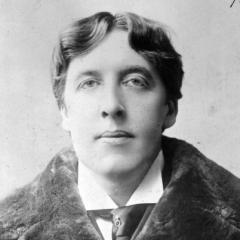
Oscar Wilde
Oscar Wilde

Oscar Wilde, born on October 16, 1854, in Ireland, and died on November 30, 1900, was a renowned Irish writer, playwright, and poet. His works are known for their wit, satire, and unique style, with notable works including 'The Picture of Dorian Gray' and 'Lady Windermere's Fan'. more

You May Also Like

“Bowman was aware of some changes in his behavior patterns; it would have been absurd to expect anything else in the circumstances. He could no longer tolerate silence; except when he was sleeping, or talking over the circuit to Earth, he kept the ship's sound system running at almost painful loudness. / At first, needing the companionship of the human voice, he had listened to classical plays--especially the works of Shaw, Ibsen, and Shakespeare--or poetry readings from Discovery's enormous library of recorded sounds. The problems they dealt with, however, seemed so remote, or so easily resolved with a little common sense, that after a while he lost patience with them. / So he switched to opera--usually in Italian or German, so that he was not distracted even by the minimal intellectual content that most operas contained. This phase lasted for two weeks before he realized that the sound of all these superbly trained voices was only exacerbating his loneliness. But what finally ended this cycle was Verdi's Requiem Mass, which he had never heard performed on Earth. The "Dies Irae," roaring with ominous appropriateness through the empty ship, left him completely shattered; and when the trumpets of Doomsday echoed from the heavens, he could endure no more. / Thereafter, he played only instrumental music. He started with the romantic composers, but shed them one by one as their emotional outpourings became too oppressive. Sibelius, Tchaikovsky, Berlioz, lasted a few weeks, Beethoven rather longer. He finally found peace, as so many others had done, in the abstract architecture of Bach, occasionally ornamented with Mozart. / And so Discovery drove on toward Saturn, as often as not pulsating with the cool music of the harpsichord, the frozen thoughts of a brain that had been dust for twice a hundred years.”

“The beauty of the flute was in its simplicity, in its resemblance to the human voice. It always sounded clear. It sounded alone. The piano, on the other hand, was a network of parts—a ship, with its strings like rigging, its case a hull, its lifted lid a sail. Kestrel always thought that the piano didn't sound like a single instrument but a twinned one, with its low and high halves merging together or pulling apart.”

“I heard the universe as an oratorio sung by a master choir of stars, accompanied by the orchestra of the planets and the percussion of satellites and moons. The aria they performed was a song to break the heart, full of tragic dissonance and deferred hope, and yet somewhere beneath it all was a piercing refrain of glory, glory, glory. And I sensed that not only the grand movements of the cosmos, but everything that had happened in my life, was a part of that song. Even the hurts that seemed most senseless, the mistakes I would have done anything to erase--nothing could make those things good, but good could still come out of them all the same, and in the end the oratorio would be no less beautiful for it.”