Quotessence
Home / Quotes / Quote by Edward Bulwer-Lytton, 1st Baron Lytton

Quote by Edward Bulwer-Lytton, 1st Baron Lytton

“The more a man desirous to pass at a value above his worth can contrast, by dignified silence, the garrulity of trivial minds, the more the world will give him credit for the wealth which he does not possess.”

Quote by Edward Bulwer-Lytton, 1st Baron Lytton

Author
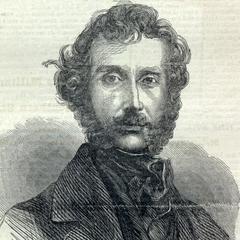
Edward Bulwer-Lytton, 1st Baron Lytton

British novelist known for his historical novels and Gothic tales, famous for works such as 'Peveril of the Peak' and 'Evelyn Hope'. more

You May Also Like

“Society is a long series of uprising ridges, which from the first to the last offer no valley of repose. Whenever you take your stand, you are looked down upon by those above you, and reviled and pelted by those below you. Every creature you see is a farthing Sisyphus, pushing his little stone up some Liliputian mole-hill. This is our world.”

“Birds sing in vain to the ear, flowers bloom in vain to the eye, of mortified vanity and galled ambition. He who would know repose in retirement must carry into retirement his destiny, integral and serene, as the Caesars transported the statue of Fortune into the chamber they chose for their sleep.”

“In early youth, if we find it difficult to control our feelings, so we find it difficult to vent them in the presence of others. On the spring side of twenty, if anything affects us, we rush to lock ourselves up in our room, or get away into the street or the fields; in our earlier years we are still the savages of nature, and we do as the poor brutes do. The wounded stag leaves the herd; and if there is anything on a dog's faithful heart, he slinks away into a corner.”

“When some one sorrow, that is yet reparable, gets hold of your mind like a monomania,--when you think, because Heaven has denied you this or that, on which you had set your heart, that all your life must be a blank,--oh, then diet yourself well on biography,--the biography of good and great men. See how little a space one sorrow really makes in life. See scarce a page, perhaps, given to some grief similar to your own, and how triumphantly the life sails on beyond it.”

“In some exquisite critical hints on "Eurythmy," Goethe remarks, "that the best composition in pictures is that which, observing the most delicate laws of harmony, so arranges the objects that they by their position tell their own story." And the rule thus applied to composition in painting applies no less to composition in literature.”