“I would beg the wise and learned fathers (of the church) to consider with all diligence the difference which exists between matters of mere opinion and matters of demonstration. ... [I]t is not in the power of professors of the demonstrative sciences to alter their opinions at will, so as to be now of one way of thinking and now of another. ... [D]emonstrated conclusions about things in nature of the heavens, do not admit of being altered with the same ease as opinions to what is permissible or not, under a contract, mortgage, or bill of exchange.”
Quote by Galileo Galilei
Author
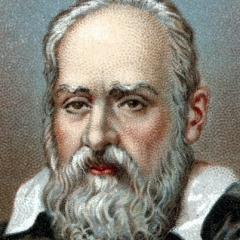
Galileo Galilei
Galileo Galilei, an Italian physicist, astronomer, mathematician, and philosopher, is considered the father of modern science. He was born on February 15, 1564, and died on January 8, 1642. Galileo made significant contributions to the fields of physics, astronomy, mathematics, and philosophy. He discovered the four moons of Jupiter through his telescope, supporting Copernicus' heliocentric model, and proposed the law of free fall and other scientific theories. more
You May Also Like
“In nature things move violently to their place, and calmly in their place.”
Source: The works of Francis Bacon, Baron of Verulam, Viscount St. Alban, and Lord High Chancellor of England, in five volumes
Source: Preliminary discourse on the study of natural philosophy
Source: Theoretical Philosophy, 1755-1770
Source: Economics of Defense Policy: Adm. H.G. Rickover : Hearing Before the Joint Economic Committee, Congress of the United States, Ninety-seventh Congress, Second Session