Quotessence
Home / Quotes / Quote by Katt Williams

Quote by Katt Williams

“Invisibility is the only thing that fame cost me. I used to be able to go places and blend in. Anonymity is something you lose on this side of things.”

Quote by Katt Williams

Author
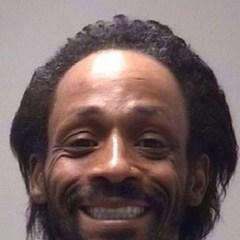
Katt Williams
Katt Williams

Katt Williams, born Katt Avary, is an American comedian, actor, and rapper. Known for his unique humor style and sharp wit, he is renowned for his performances in television shows, movies, and live stand-up acts. Williams was born on September 2, 1973, and his career began in the 1990s, gaining widespread recognition in the early 2000s. more

You May Also Like

“I can remember thinking, at the age of 3, that I invented the concept of lying. By a brilliant thought process, I figured that I could fib and avoid the repercussions for something I had done, because lying meant that it never happened. However, by the time I was 5, I came to hate lying and to think of it as the worst thing in the world. That's my earliest memory. Weird, but true!”

“It's true that in a lot of western feminist movements, you see women working singularly from men. Suffragettes and the women's rights movement in the 60s here, but when I think of the Islamic feminist movement, I think of a lot of men who are very much standing with the women. It really feels like in equal numbers. Women are catching up in the field because we were not given access to knowledge and encouraged into these studies and so these men are helping us and empowering us. They are men of conscience who are fed up with this assumption that they're entitled.”

“When we think about Islamic feminism, it is not just about women's rights. It's about a more progressive and tolerant expression of Islam in the world for all people. Women's rights is one aspect of it, it's not the end-all, but I also think that the women's issue is the strongest entry point that we've got to challenging extremism. You raise a woman's issue and you get the backs of the conservatives up against the wall faster than just about any other issue in our community. It's the fastest path that we've got to making change happen.”

“I think that we don't have, here in the Middle East or in Africa, as much threat to our physical and economic livelihood as women in other parts of the world. But the continuum is the same. The pressures on women to fit into a certain image of a good Muslim girl is the same. The controls and rules are the same, but there are different degrees of it. So, in America, a father will threaten a daughter that he will disown her if she marries the American boyfriend and in Pakistan she faces acid thrown on her face. The power dynamic is the same, it just expresses itself differently.”

“Personally I get so much of my inspiration from women in other countries, so I don't feel like American women are the leaders and I don't agree with the notion that Americans can accomplish more or do more. But I do think that what we can uniquely do here in America is mobilize and galvanize a lot of these ideas and resources. It's a war of ideas. We, Islamic women, are very well supported in this country by institutions, academic and nonprofit, that are already in the field endorsing women's rights and tolerance. The women in other communities have been the pioneers in this work.”

“Talk to me 20 years ago and I had a complete sense of illegitimacy as an American Muslim. I felt like I wasn't authentic. But I don't understand and I don't believe or subscribe to this idea that I don't have a right to speak as a Muslim because I'm an American. Being Muslim is to accept and honor the diversity that we have in this world, culturally and physically, because that's what Islam teaches, that we are people of many tribes. I think the American Muslim experience is of a different tribe than the Saudi Muslim world, but that doesn't make us less than anyone else.”

“One of our greatest challenges here in America is that pogressives don't always stand with the progressive Muslims because in the interest of freedom of religion and civil liberties and political correctness, they don't want to offend cultural choices by Muslims. I know that people have gone to these interfaith sessions at different mosques and they see that the women end up in the basement, but they don't want to challenge anyone because they think, "Oh, well this is your way".”