Quotessence
Home / Quotes / Quote by Marcus Aurelius

Quote by Marcus Aurelius

Author

Marcus Aurelius
Marcus Aurelius

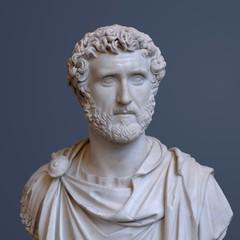
Marcus Aurelius, born in 121 AD and died in 180 AD, was an emperor of the Roman Empire. He is one of the Five Good Emperors and is known for his philosophical thoughts and the stability of his reign. He was not only an outstanding politician but also a famous Stoic philosopher, whose work 'Meditations' has had a profound impact on later generations. more

You May Also Like

“This world has seen a great many civilizations. And many of them have survived for longer periods than ours up to the present. They were all as sure as we are today of having founded the first eternal civilization. We today differ from them in having our western civilization spread to embrace the entire planet, leaving no room on any continent for any other culture to take over if we fail.”

“All of the elements of the comic way tend to spread to others, insinuating joy where it was previously absent. Conversation has a way of leaping among persons, as it does at parties and celebratory gatherings. Storytelling always begets storytelling. It is difficult to watch others at play without wanting to join them. This is not only a human phenomenon, for researchers have consistently noted that animals at play are often imitated by other animals. So wherever it is possible to initiate a playful activity, it will have a good chance of replicating itself through other parts of the system.”

“But the human body has an enormous capacity for adjusting to trying circumstances. I have found that one can bear the unbearable if one can keep one's spirits strong even when one's body is being tested. Strong convictions are the secret of surviving deprivation; your spirit can be full even when your stomach is empty.”

“That is the future, and it is probably nearer than we think. But our primary problem as universities is not engineering that future. We must rise above the obsession with quantity of information and speed of transmission, and recognize that the key issue for us is our ability to organize this information once it has been amassed - to assimilate it, find meaning in it, and assure its survival for use by generations to come.”