Quotessence
Home / Quotes / Quote by Mark Twain

Quote by Mark Twain

“I cannot see the short, white curls Upon the forehead of an Ox, But what I see them dripping with That poor thing's blood, and hear the ax; When I see calves and lambs, I see Them led to death; I see no bird Or rabbit cross the open field But what a sudden shot is heard; A shout that tells me men aim true, For death or wound, doth chill me through. W.H. Davies I have been studying the traits and dispositions of the "lower animals" (so called) and contrasting them with the traits and dispositions of man. I find the result humiliating to me.”

Quote by Mark Twain

Author
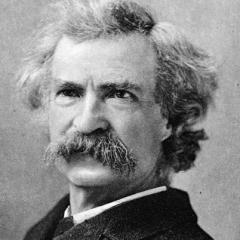
Mark Twain
Mark Twain

Mark Twain, born Samuel Langhorne Clemens, was a renowned American author and humorist in the 19th century. His works are characterized by humor, satire, and profound social insight, with notable novels such as 'The Adventures of Tom Sawyer' and 'The Adventures of Huckleberry Finn'. more

You May Also Like

“It would not do for the consumer to know that the hamburger she is eating came from a steer who spent much of his life standing deep in his own excrement in a feedlot, helping to pollute the local streams. Or that the calf that yielded the veal cutlet on her plate spent its life in a box in which it did not have room to turn around. Wendell Berry, "The Pleasures of Eating," What Are People For?, 1989 Jesus pioneered a relationship ethic based on compassion. Being a disciple means building relationships - with the Creator and with all creation and creatures.”

“Leaving the complications of the human breakfast-table out of account, in an elemental sense, the egg only exists to produce the chicken. But the chicken does not exist only in order to produce another egg. He may also exist to amuse himself, to praise God, and even to suggest ideas to a French dramatist. Being a conscious life, he is, or may be, valuable in himself.”

“O God, enlarge within us the sense of fellowship with all living things, even our brothers, the animals, to whom Thou gavest the earth as their home in common with us. We must remember with shame that in the past we have exercised the high dominion of man with ruthless cruelty so that the voice of the earth, which should have gone up to thee in song, has been a groan of pain. May we realize that they live, not for us alone, but for themselves and for Thee and that they love the sweetness of life.”

“Once we were happy in our own country and we were seldom hungry, for then the two-leggeds and the four-leggeds lived together like relatives, and there was plenty for them and for us. But the Wasichus came, and they have made little islands for us and other little islands for the four-leggeds, and always these islands are becoming smaller, for around them surges the gnawing flood of the Wasichu; and it is dirty with lies and greed.”