Quotessence
Home / Quotes / Quote by Nat Hentoff

Quote by Nat Hentoff

Author

Nat Hentoff
Nat Hentoff

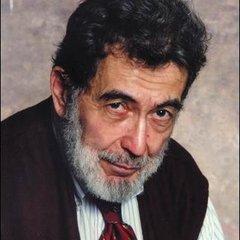
Nat Hentoff was an American historian known for his contributions to the fields of liberalism and the civil rights movement. Born on June 10, 1925, and passing away on January 7, 2017, Hentoff's work covered a wide range of topics, including music, literature, law, and social justice. more

You May Also Like

“I've - that I regret. That was stupid and ignorant on my part. I went to a party as a guest of a friend of mine, a lawyer. And he had a client who I didn't know, except - maybe I'm pretending I didn't know, but he was a big investor in The New Yorker. And as I found out later in a book about The New Yorker, this guy was very unhappy about [Bill] Shawn.He thought Shawn was spending out - spending too much money on writers.”

“I told [a big investor in The New Yorker] - I was complaining the way writers complain.I said`[Bill Shawn] pays very well, but a lot of my pieces don't get in,' and that was true of most of the writers there.But he pays you for them, that was very nice of him. This guy didn't think it was very nice. He figured, `Oh, my God, that's more of my investment gone,' and paying money to writers for not printing them. That became, apparently, one of his weapons against Shawn when he - in the corporate skirmishes that went on. It was a bad mistake on my part.”

“After [Bill Shawn] was fired, I was going to the YMHA [Young Men's Hebrew Association] on the Upper East Side to do a talk on free speech.I went into a coffee shop to get a piece of pie and a coffee, and I was reading a paper and I hear a voice. And it was -it was not a voice I was familiar with, but I looked across the table and I saw Lilian Ross.And sitting next to her was William Shawn - no tie, needed a shave. His voice was kind of coarse and rather loud. He wasn't drunk, but I was just stunned.”

“Carl Armstrong was one of those people in the anti-war years who had been so convinced of the righteousness of their cause that he and some friends decided they would blow up a building at the University of Wisconsin, in which they said research was being done to help the war against the Vietnamese. What they blew up at three or four in the morning was a young scientist, who was married and had a couple of kids, who wasn't working on war stuff at all. And he was killed.”

“I was less angry at [Carl] Armstrong, though I was angry at the people who came to his trial: Dan Ellsberg, who ordinarily I respected a lot; Philip Berrigan; the guy who teaches at Princeton still - I can't remember his name. And they were saying - well, they were saying, really, what Arthur Koestler had people saying on "Darkness at Noon." The means were unfortunate and, sadly, someone died, but the end is what is important and this was a great symbolic - something or other - sign against the war in Vietnam.”