Quotessence
Home / Quotes / Quote by John Ehrlichman

Quote by John Ehrlichman

“Look, we understood we couldn't make it illegal to be young or poor or black in the United States, but we could criminalize their common pleasure. We understood that drugs were not the health problem we were making them out to be, but it was such a perfect issue for the Nixon White House that we couldn't resist it.”

Quote by John Ehrlichman

Author
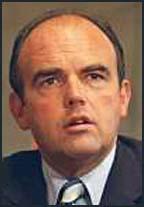
John Ehrlichman
John Ehrlichman

John Ehrlichman (March 20, 1925 – February 14, 1999) was an American lawyer and political figure who served as Counsel to President Richard Nixon. He is best known for his central role in the Watergate scandal, which led to Nixon's resignation. Born in Tacoma, Washington, Ehrlichman studied at UCLA and Stanford Law School. He worked as a lawyer before joining Nixon's campaign team. As Domestic Affairs Advisor, he was involved in the cover-up of the Watergate break-in. After being convicted of conspiracy, obstruction of justice, and perjury, he served 18 months in prison. Following his release, he became an author and speaker, writing books including 'Witness to Power.' His life reflects the complexities of power, ethics, and law in American politics. more

You May Also Like

“You have to take the long view. First, when Moses came down from Mt. Sinai, man has already progressed to the point where a commandment against cannibalism was no longer necessary. And, second, it's like pissing on a boulder. For the first few thousand years, you don't see any effect. But after that, you start to see a definite impact.”

“Patriotism at the expense of another nation is as wicked as racism at the expense of another race. . . Let us resolve to be patriots always, nationalists never. Let us love our country, but pledge allegiance to the earth and to the flora and fauna and human life that it supports - one planet indivisible, with clean air,... soil and water; with liberty, justice and peace for all.”

“Organic planning does not begin with a preconceived goal; it moves from need to need, from opportunity to opportunity, in a series of adaptations that themselves become increasingly coherent and purposeful, so that they generate a complex final design, hardly less unified than a pre-formed geometric pattern.”