Quotessence
Home / Quotes / Quote by Jenny Valentine

Quote by Jenny Valentine

Work

Me, the Missing, and the Dead

Browse quotes and source details for this work. more

Author
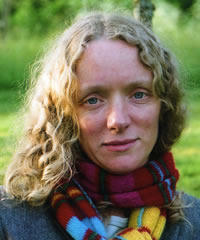
Jenny Valentine
Jenny Valentine

Jenny Valentine is a British novelist born in 1970. Her works primarily focus on young adult themes and have gained widespread popularity. Valentine's books often delve into the emotional aspects of adolescence, family relationships, and social issues. more

You May Also Like

“I'll tell you something,' Arthur said. 'Until a certain age, everyone thinks their parents are heroes. Then they grow up a little, start to understand a little more of the world, and they realize their parents are just people. It destroys them, just a little bit. But it's part of becoming an adult. Everyone goes through it. You, on the other hand--your parents really are heroes, at least to everyone else. It's a bit remarkable, really. You never went through that disappointment of finding out your parents are just people.”

“At a certain point you have to leave childish things behind, and one of the childish things is a sense that 'Wow, I can draw' or in my case 'Wow, I can read'... You feel you have what's called a talent, but as you become an adult, if you hope to make things, you have to give up the preoccupation with talent otherwise you'll spend your life painting beautiful pictures of fruit bowls that look like fruit bowls.”

“She looked for any sign of the boy who'd taught her to whistle a hornpipe, who could palm an ace of hearts and make it reappear from her sleeve, but failed to find even a glimmer of him. Instead she saw Ida taking on a second life in the features of her only son, and for a quick heartbeat Jo was almost grateful for the scar tissue dimpled across her cheek, forehead, and chin. No one would ever be able to invade her face, she realized. She would always simply be herself, whether she liked it or not.”

“What I feel now doesn't matter at all? But at what point am I entitled to say to myself, what I am feeling now is valid? After all, Anna-' Here Tommy turned to face her: 'one can't go through one's whole life in phases. There must be a goal somewhere.' His eyes gleamed out hatred; and it was with difficulty that Anna said: 'If you're suggesting that I've reached a goal, and I'm judging you from some superior point, then it's not true.' 'Phases,' he insisted. 'Stages. Growing pains.' 'But I think that's how women see-people. Certainly their own children. In the first place, there's always been nine months of not knowing whether the baby would be a girl or a boy. Sometimes I wonder what Janet would have been like if she'd been born a boy. Don't you see! And then babies go through one stage after another, and then they are children. When a woman looks at a child she sees all the things he's been at the same time. When I look at Janet sometimes I see her as a small baby and I feel her inside my belly and I see her as various sizes of small girl, all at the same time.' Tommy's stare was accusing and sarcastic, but she persisted: 'That's how women see things. Everything in a sort of continuous creative stream-well, isn't it natural we should?”