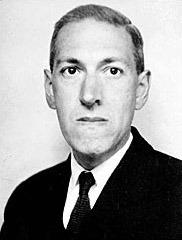
“More wonderful than the lore of old men and the lore of books is the secret lore of the ocean. Blue, green, grey, white, or black; smooth, ruffled, or mountainous; that ocean is not silent. All my days I have watched it and listened to it, and I know it well. At first it told to me only the plain little tales of calm beaches and near ports, but with the years it grew more friendly and spoke of other things; of things more strange and more distant in space and time.”
Source: Complete Collection Of H. P. Lovecraft - 150 eBooks With 100+ Audiobooks (Complete Collection Of Lovecraft's Fiction, Juvenilia, Poems, Essays And Collaborations)
“Through the ghoul-guarded gateways of slumber, Past the wan-mooned abysses of night, I have lived o'er my lives without number, I have sounded all things with my sight.”
“Time has been transformed, and we have changed; it has advanced and set us in motion; it has unveiled its face, inspiring us with bewilderment and exhilaration.”
“Man's relations to man do not captivate my fancy. It is man's relation to the cosmos--to the unknown--which alone arouses in me the spark of creative imagination.”
Source: The Annotated Supernatural Horror in Literature
“We must recognise the essential underlaying savagery in the animal called man, and return to older and sounder principles of national life and defense. We must realise that man's nature will remain the same so long as he remains man; that civilisation is but a slight coverlet beneath which the dominant beast sleeps lightly and ever ready to awake.”
Source: Delphi Complete Works of H. P. Lovecraft (Illustrated)
“In my actual imaginative contact with life, I am vastly more responsive to beauty than to horror - indeed, I never experience real cosmic horror except in infrequent nightmares. However, when I come to record my various imaginative experiences, I generally find that only the horror items have any uniqueness or originality. Others have seen the same beautiful things that I have seen, & have sung them more nobly.”
“There are probably seven persons, in all, who really like my work; and they are enough. I should write even if I were the only patient reader, for my aim is merely self-expression.”
Source: The Annotated Supernatural Horror in Literature
“The appeal of the spectrally macabre is generally narrow because it demands from the reader a certain degree of imagination and a capacity for detachment from every-day life. Relatively few are free enough from the spell of the daily routine to respond to rappings from outside, and tales of ordinary feelings and events, or of common sentimental distortions of such feelings and events, will always take first place in the taste of the majority; rightly, perhaps, since of course these ordinary matters make up the greater part of human experience.”
Source: H.P. Lovecraft: The Ultimate Collection (160 Works Including Early Writings, Fiction, Collaborations, Poetry, Essays & Bonus Audiobook Links)
“It is only the inferior thinker who hastens to explain the singular and the complex by the primitive shortcut of supernaturalism.”
Source: H. P. LOVECRAFT äóñ The Ultimate Horror Collection: 60 Occult & Supernatural Mysteries in One Volume: The Greatest Spine-Chilling and Blood-Curdling Stories of Terror & Macabre: The Call of Cthulhu, The White Ship, The Dunwich Horror, At The Mountains Of Madness, The Whisperer in Darknessäó_
“No amount of rationalisation, reform, or Freudian analysis can quite annul the thrill of the chimney-corner whisper or the lonely wood.”
Source: Complete Collection Of H. P. Lovecraft - 150 eBooks With 100+ Audiobooks (Complete Collection Of Lovecraft's Fiction, Juvenilia, Poems, Essays And Collaborations)