Quotessence
Home / Quotes / Quote by Rachel Carson

Quote by Rachel Carson

“The question of chemical residues on the food we eat is a hotly debated issue. The existence of such residues is either played down by the industry as unimportant or is flatly denied. Simultaneously, there is a strong tendency to brand as fanatics or cultists all who are so perverse as to demand that their food be free of insect poisons. In all this cloud of controversy, what are the actual facts?”

Quote by Rachel Carson

Work

Silent Spring

Published in 1962, Silent Spring is a seminal work that sparked the modern environmental movement. The book investigates the effects of chemical pesticides on the environment and human health, leading to significant changes in environmental policy and the regulation of pesticides. more

Author

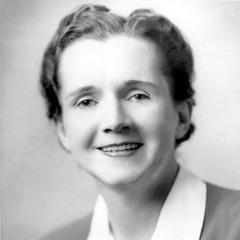
Rachel Carson
Rachel Carson

Rachel Carson, an American marine biologist, was born on May 27, 1907, and passed away on April 14, 1964. She is renowned for her in-depth research on marine ecosystems and her advocacy for environmental issues. Carson's book 'Silent Spring' revealed the destructive impact of pesticides on the environment, which had a profound impact on the environmental movement. more

You May Also Like

“Continuing to do research on genetic modification, and occasionally using successfully modified organisms for specific purposes such as the production of expensive drugs, make good sense. Helping developing countries to produce more food is a worthy aim, but it is sometimes used as an excuse for an alternative agenda, or as a convenient way to demonise opponents. There is little doubt that the technology needs better regulation: I find it bizarre that standard food safety tests are not required, on the grounds that the plants have not been changed in any significant way, but that the innovations are so great that they deserve patent protection, contrary to the long-standing view that naturally occurring objects and substances cannot be patented. Either it’s new, and needs testing like anything else, or it’s not, and should not be patentable. It is also disturbing, in an age when commercial sponsors blazon their logos across athletes’ shirts and television screens, that the biotechnology industry has fought a lengthy political campaign to prevent any mention of their product being placed on food. The reason is clear enough: to avoid any danger of a consumer boycott. But consumers are effectively being force-fed products that they may not want, and whose presence is being concealed. Our current understanding of genetics and ecology is inadequate when it comes to the widespread use of genetically modified organisms in the natural environment or agriculture. Why take the risk of distributing the material, when the likely gains for most of us – as opposed to short-term profits for biotechnology companies – are tiny or non-existent?”

“It was one of those red-gold early October days, the air crisp and tart as heady as applejack, and even at dawn the sky was the clear, purplish blue that only the finest of autumn days brings. There are maybe three such days in a year. I sang as I lifted my traps, and my voice bounced off the misty banks of the Loire like a challenge. It was the mushroom season, so after I had brought my catch back to the farm and cleaned it out, I took some bread and cheese for breakfast and set out into the woods to hunt for mushrooms. I was always good at that. Still am, to tell the truth, but in those days I had a nose like a truffle pig's. I could smell those mushrooms out, the gray chanterelle and the orange, with its apricot scent, the bolet and the petit rose and the edible puffball and the brown-cap and the blue-cap. Mother always told us to take our mushrooms to the pharmacy to ensure we had not gathered anything poisonous, but I never made a mistake. I knew the meaty scent of the bolet and the dry, earthy smell of the brown-cap mushroom. I knew their haunts and breeding grounds. I was a patient collector.”

“It's not just the taste, she will try to explain. The rich dark truffle, flavored with rum; the hint of chili in the blend; the yielding smoothness of the center and the bitterness of the cocoa-powder finish... none of these explain the strange allure of Yanne Charbonneau's chocolate truffles. Perhaps it's the way they make you feel: stronger, perhaps; more powerful; more alert to the sounds and scents of the world; more aware of the colors and textures of things; more aware of yourself; of what's under the skin; of the mouth, of the throat, of the sensitive tongue.”

“He passed the rutabaga and duck terrine toward me with the tips of his fingers. "Isn't this a little odd?" I wanted to like it, I did. I pushed the ingredients around with my knife and fork, trying to understand it and formulate an opinion. Then Felix swooped in. "Oh, miss. Pardon me, I was helping another table. That's supposed to be served with something else." He looked at Michael Saltz sheepishly, and Michael Saltz turned his toupeed head away. "We added this dish today, and I'm still getting used to serving it. The proper preparation includes just a bit of truffle." He took out a fist-size beige knot from underneath a white napkin. The shavings rained down in ruffled, translucent strands. Felix backed away as I poked my fork through the tangle of truffles, into the terrine. I had read about truffles- their taste, their hormonal, almost sexual aromas, their exorbitant cost- but I had never even seen a truffle in person before, and had a hard time understanding why people paid thousands of dollars an ounce for something so humble-looking. But at Tellicherry, I understood. I melted in my chair. "Mmm..." I couldn't stop saying it. "Mmmm." Michael Saltz, excited too, picked up a large pinch of truffle shavings and held them to his nose. "These are very good. The finest." "Oh God," I said, in a state of delirium. "This makes the dish so much better. Why aren't truffles on everything?" I had forgotten about the funky terrine. Now it was just a vehicle for the magical urgings of the truffle. A few minutes later, Felix came out again. "Here's your next dish, potato pearls with black, green, and crimson caviar in a cauliflower cream nage." The caviar shined like little jewels among the equal-sized potatoes. They bobbed around in the soup, glistening as if illuminated from within. I took a spoonful and in surged a soft, sweet ribbon of cauliflower essence. I popped the caviar eggs one by one. Pop, went one, a silken fishiness. Pop, went another, a sharp, tangy brine. Pop, went a seductive one, dark and mysterious and deep.”