Quotessence
Home / Quotes / Quote by Roger Zelazny

Quote by Roger Zelazny

“He continued to move forward, skirting a pocket of radiation that had not died in the four years since last he had come this way. They came upon a place where the sands were fused into a glassy sea, and he slowed as he began its passage, peering ahead after the craters and chasms it contained. Three more rockfalls assailed him before the heavens split themselves open and revealed a bright-blue light, edged with violet. The dark curtains rolled back toward the Poles, and the roaring and the gunfire reports diminished. A lavender glow remained in the north, and a green sun dipped toward the horizon at his back. They had ridden it out, and he killed the infras, pushed back his goggles, and switched on the normal night lamps. The desert would be bad enough, all by itself. Something big and batlike swooped through the tunnel of his lights and was gone. He ignored its passage. Five minutes later it made a second pass, this time much closer, and he fired a magnesium flare. A black shape, perhaps forty feet across, was illuminated, and he gave it two five-second bursts from the fifty-calibers, and it fell to the ground and did not return again. To the squares, this was Damnation Alley. To Hell Tanner, this was still the parking lot.”

Quote by Roger Zelazny

Author
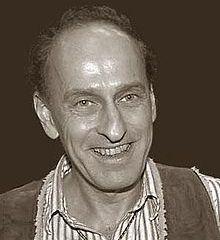
Roger Zelazny
Roger Zelazny

Roger Zelazny was an American science fiction and fantasy writer known for his unique literary style and rich imagination. His works spanned a wide range of genres from science fiction to fantasy, with his most famous series including 'The Chronicles of Amber' and 'Avalon'. Zelazny began his writing career in the 1950s, and his works have had a profound impact on science fiction and fantasy literature in the following generations. more

You May Also Like

“There is no doubt that 'force multipliers' - squad automatic weapons - have changed the character of warfare once again, just as their predecessors did during the First World War, if perhaps not to quite the same degree. In the immediate future it seems that most armies will be using some form of 5.56mm machine-gun at squad level, be it a box-fed LSW or belt-fed SAW. If there is a cloud on the horizon where modern light machine-guns are concerned it is that they are not powerful enough for long-range work, or for penetrating cover and light armour. Nevertheless, the new generation of light machine-guns will remain in use well into the next century, not least because they are popular with the soldiers who operate them, the machine-gunners. Likewise, there will still be a place for the heavier GPMG, which does have the 'punch' that the LSW lacks. Machine-guns themselves have become lighter, and their operating principles both more secure and more efficient; the ammunition they use has shrunk to a quarter of its original size and become almost 100 percent reliable. The one important thing which has not changed dramatically is the human component; the attitude with which man faces the prospect of death in battle, and how he prepares himself to face that possibility quite deliberately, for it was the original invention of the machine-gun which reformed that. More than any other single 'advance' in weapons technology, the machine-gun allowed an individual (or actually, a small team of men) to dominate a sector of the battlefield. They had an inhuman advantage which simply had to be exploited if they were to be on the winning side, whether their opponents were Zulus, Sioux, or Dervishes, or other industrialized nations to be beaten into last place in the race toward economic supremacy. Whether the machine-gun has been as important, in any sense at all of the word, as it near-contemporary, the internal combustion engine - or even, date one say it, the bicycle or sewing machine - is still to be decided, but there is one clear, irrefutable fact connected with its short history: it has killed tens of millions of men, women and children and blighted the lives of tens of millions more.”

“I'm crying because I have nothing...nothing left for you.' This made the witness very sad. He didn't want to be left out, so he began to cry, too. 'Wait', the gray boy said. 'For you, my brightest disciple, I have something special. I give all I have left...' The gray boy slipped his fingers through his ribs and tore out a piece of his heart and offered it to the witness. 'Take and eat, for this is my body' he said. The witness remarked that it tasted like Wonder Bread soaked in the juices of deiced Del Monte vegetables with just a pinch of sugar. He never felt happier in all his life. Now he belonged.”

“The connection between the changing role of the police in American society and efforts to control culturally subversive groups is illustrated in the backgrounds of some of the most well-known of the “occult cops.” Debbie Nathan and Michael Snedecker’s examination of these usually low-ranking detectives found that many of them “had spied on groups opposing racism or the Vietnam War in the late 1960s.” Before morphing into “occult experts” they traveled the “small town lecture circuit” warning mainly white, middle-class audiences about the danger of “Moonies” and other alternative religious movements. The role of the police in the satanic panic of the 1980s appears to be symptomatic of a much larger problem. Rather than asking its police to prevent and prosecute crimes against person and property, white America asked it to crusade against evil, to slay monsters and demons. In an urban America prostrated by the growing economic inequality of the 1980s and the consequent deadly mix of entrepreneurialism and despair that constituted the crack epidemic, politicians gravitated to the “tough on crime” rhetoric that became such an important part of the successful campaigns of Reagan, Bush, and Clinton. Meanwhile, the leadership of the evangelical and Charismatic worlds adopted a very similar rhetoric in which their followers were asked to engage in an unrelenting war on the forces of darkness threatening their homes, children, churches, and communities.”