Quotessence
Home / Quotes / Quote by Richard Hugo

Quote by Richard Hugo

“Maximum sentence length: seventeen words. Minimum:one No semicolons. Semicolons indicate relationships that only idiots need defined by punctuation. Besides, they are ugly. Make sure each sentence is at least four words longer or shorter than the one before it.”

Quote by Richard Hugo

Author
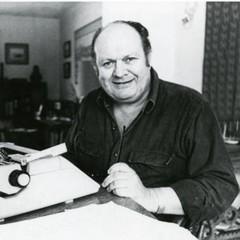
Richard Hugo
Richard Hugo

Richard Hugo was an American poet known for his deep emotions and rich imagination. His works often explore the meaning of human existence and the fragility of life. He was born on December 21, 1923, and passed away on October 22, 1982. more

You May Also Like

“You may ... make a little recreation of poetry, in the midst of your painful studies. Nevertheless, I cannot but advise you. Withhold thy throat from thirst. Be not so set upon poetry, as to be always poring on the passionate and measured pages. ... let not the Circean cup intoxicate you.”

“Most poetry is the utterance of a man in some state of passion, love, joy, grief, rage, etc., and no doubt this is as it should be. But no man is perpetually in a passion and those states in which he is amused and amusing, detached and irreverent, if less important, are no less amusing. If there were no poets who, like Byron, express these states, Poetry would lack something.”

“Be not so set upon poetry, as to be always poring on the passionate and measured pages. Let not what should be sauce, rather than food for you, engross all your application. Beware of a boundless and sickly appetite for the reading of poems which the nation now swarms withal; and let not the Circaen cup intoxicate you. But especially preserve the chastity of your soul from the dangers you may incur, by a conversation with muses no better than harlots.”

“What the world wants, what the world is waiting for, is not Modern Poetry or Classical Poetry or Neo-Classical Poetry - but Good Poetry. And the dreadful disreputable doubt, which stirs in my own skeptical mind, is doubt about whether it would really matter much what style a poet chose to write in, in any period, as long as he wrote Good poetry.”