“...in the shaping of a life, chance and the ability to respond to chance are everything.”
Quote by Eric Hoffer
Work
Between the Devil and the Dragon: The Best Essays and Aphorisms of Eric Hoffer
This book compiles a selection of Eric Hoffer's most insightful essays and aphorisms, offering readers a glimpse into his profound thoughts on human nature, society, and the complexities of the world. more
Author
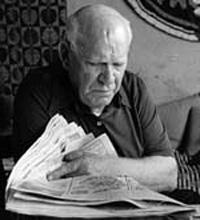
Eric Hoffer
Eric Hoffer was an American philosopher known for his profound insights into human nature. His works often explore society, politics, and human behavior, particularly focusing on the experiences of the underclass. Hoffer came from a German immigrant family and worked in various jobs in California during his youth, including dockworker, cook, and gardener. His first book, 'The Ordeal of Change', was published in 1950 and quickly became a bestseller, gaining him widespread recognition. His other works include 'The Ordeal of Change' and 'The True Believer' among others. more
You May Also Like
Source: The Works of Thomas Jefferson: Correspondence 1771 - 1779, the Summary View, and the Declaration of Independence
“I never met another man I'd rather be. And even if that's a delusion, it's a lucky one.”
“Intelligence is an accident of evolution, and not necessarily an advantage.”
Source: Delphi Complete Works of Friedrich Nietzsche (Illustrated): Friedrich Nietzsche
Source: Common Sense & The Rights of Man - The Voice of the American Revolution: Words of a Visionary That Sparked the Revolution and Remained the Core of American Democratic Principles
“If you think health care is expensive now, wait until you see what it costs when it's free.”
Source: Age and Guile Beat Youth, Innocence, and a Bad Haircut
Source: The Strenuous Life: Essays and Addresses