Quotessence
Home / Quotes / Quote by Amy Vanderbilt

Quote by Amy Vanderbilt

Work

Amy Vanderbilt's complete book of etiquette: a guide to gracious living

This book provides an extensive collection of rules and tips for social interactions, dining, dress, and other areas of etiquette. It aims to help readers navigate the complexities of social situations with grace and confidence. more

Author
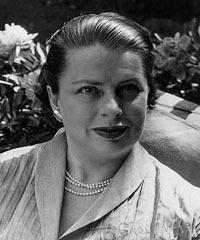
Amy Vanderbilt
Amy Vanderbilt

Amy Vanderbilt, an American author born on July 22, 1908, and died on December 27, 1974, is renowned for her culinary books and lifestyle guides. She made significant contributions to the modern American culinary culture. more

You May Also Like

“Poetry is the most direct and simple means of expressing oneself in words: the most primitive nations have poetry, but only quitewell developed civilizations can produce good prose. So don't think of poetry as a perverse and unnatural way of distorting ordinary prose statements: prose is a much less natural way of speaking than poetry is. If you listen to small children, and to the amount of chanting and singsong in their speech, you'll see what I mean.”

“Science begins with the world we have to live in, accepting its data and trying to explain its laws. From there, it moves toward the imagination: it becomes a mental construct, a model of a possible way of interpreting experience. The further it goes in this direction, the more it tends to speak the language of mathematics, which is really one of the languages of the imagination, along with literature and music. Art, on the other hand, begins with the world we construct, not with the world we see. It starts with the imagination, and then works toward ordinary experience.”

“Work, as we usually think of it, is energy expended for a further end in view; play is energy expended for its own sake, as with children's play, or as manifestation of the end or goal of work, as in "playing" chess or the piano. Play in this sense, then, is the fulfillment of work, the exhibition of what the work has been done for.”

“Myths, as compared with folk tales, are usually in a special category of seriousness: they are believed to have "really happened,"or to have some exceptional significance in explaining certain features of life, such as ritual. Again, whereas folk tales simply interchange motifs and develop variants, myths show an odd tendency to stick together and build up bigger structures. We have creation myths, fall and flood myths, metamorphose and dying-god myths.”