Quotessence
Home / Quotes / Quote by Lesslie Newbigin

Quote by Lesslie Newbigin

Work

Foolishness to the Greeks: The Gospel and Western Culture

This book delves into the impact of Christian teachings on various aspects of Western society, examining the historical and philosophical implications of the Gospel in the context of European civilization. more

Author
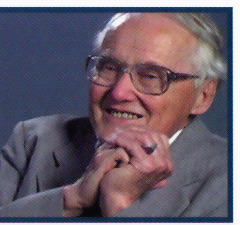
Lesslie Newbigin
Lesslie Newbigin

Lesslie Newbigin, born on December 8, 1909 and died on January 30, 1998, was a prominent Christian theologian and author. His work focused on cultural, religious, and social issues, and had a profound impact on contemporary Christian theology. more

You May Also Like

“The effect of the post-Enlightenment project for human society is that all human activity is absorbed into labor. It becomes an unending cycle of production for the sake of consumption. The modern concept of "built-in obsolescence" makes this clear. The cycle of production and consumption has to be kept going, and the work of the artist or craftsman who aims to create something enduring becomes marginal to the economic order.”

“To the extent that we consume, in our present circumstances, we are guilty. To the extent that we guilty consumers are conservationists, we are absurd. But what can we do? Must we go on writing letters to politicians and donating to conservation organizations until the majority of our fellow citizens agree with us? Or can we do something directly to solve our share of the problem? I am a conservationist. I believe wholeheartedly in putting pressure on the politicians and in maintaining the conservation organizations.”

“Too much of the world's happiness depends on taking from one to satisfy another. To increase my standard of living, someone in another part of the world must lower his. The worldwide crisis of hunger that we face today is a result of that method of pursuing happiness. Industrialized nations acquire appetites for more and more luxuries and higher and higher standards of living, and increasing numbers of people are made poor and hungry. It doesn't have to be that way.”

“We used to say I don't care if I never have any money As long as I have my sweet honey and a shack in the woodland Now we say I don't care if I don't have money, but it's not true We can't live without money, no, because we don't want to We want one of those and two of those, and oh that one looks neat, wrap it up Put it on my MasterCard. Put it on my Visa And I sing it now, hey hey, hey hey, who woulda thunk it Hey hey, hey hey, who woulda thunk it.”

“What can become of him if he is in such bondage to the habit of satisfying the innumerable desires he has created for himself? He is isolated, and what concern has he with the rest of humanity? They have succeeded in accumulating a greater mass of objects, but the joy in the world has grown less.”

“What does a man need - really need? A few pounds of food each day, heat and shelter, six feet to lie down in - and some form of working activity that will yield a sense of accomplishment. That's all - in the material sense, and we know it. But we are brainwashed by our economic system until we end up in a tomb beneath a pyramid of time payments, mortgages, preposterous gadgetry, playthings that divert our attention from the sheer idiocy of the charade. The years thunder by.”

“What is the chief end of man?-to get rich. In what way?-dishonestly if we can; honestly if we must. Who is God, the one and only true? Money is God. Gold and Greenbacks and Stock-father, son, and ghosts of same, three persons in one; These are the true and only God, mighty and supreme.”

“When I lost my faith in people I put my trust in things To avoid the disappointment Trusting people brings... I tried to do it all myself then Surrounded by my stuff All I found were limitations I could not rise above There are gadgets and contraptions Immaculate machines There's a program you can download now That will even dream your dreams It'll even dream you dreams For a monthly fee Clear up your complexion You get a hundred hours free Possessions cannot save you.”

“The illusion that mechanical progress means human improvement ... alienates us from our own being and our own reality. It is precisely because we are convinced that our life, as such, is better if we have a better car, a better TV set, better toothpaste, etc., that we condemn and destroy our own reality and the reality of our natural resources. Technology was made for man, not man for technology. In losing touch with being and thus with God, we have fallen into a senseless idolatry of production and consumption for their own sakes.”