Quotessence
Home / Quotes / Quote by H. P. Lovecraft

Quote by H. P. Lovecraft

“To me there is nothing more fraught with mystery & terror than a remote Massachusetts farmhouse against a lonely hill. Where else could an outbreak like the Salem witchcraft have occurred?”

Quote by H. P. Lovecraft

Author
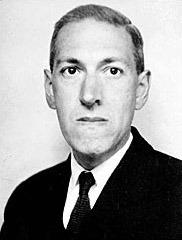
H. P. Lovecraft
H. P. Lovecraft

H.P. Lovecraft was an American horror fiction writer known for his unique cosmic horror style and Gothic narrative. His works often explore the insignificance of humans in the face of the unknown and omnipotent forces, profoundly influencing horror literature in the second half of the 20th century. more

You May Also Like

“I never cheat or steal. Also, I never wear a top-hat with a sack coat or munch bananas in public on the streets, because a gentleman does not do those things either. I would as soon do the one as the other sort of thing--it is all a matter of harmony and good taste.”

“Because we remember pain and the menace of death more vividly than pleasure, and because our feelings toward the beneficent aspects of the unknown have from the first been captured and formalised by conventional religious rituals, it has fallen to the lot of the darker and more maleficent side of cosmic mystery to figure chiefly in our popular supernatural folklore.”

“The moon is dark, and the gods dance in the night; there is terror in the sky, for upon the moon hath sunk an eclipse foretold in no books of men or of earth's gods.”

“Slowly but inexorably crawling upon my consciousness and rising above every other impression, came a dizzying fear of the unknown; a fear all the greater because I could not analyse it, and seeming to concern a stealthily approaching menace; not death, but some nameless, unheard-of thing inexpressibly more ghastly and abhorrent.”

“I am distinctly opposed to visibly arrogant and arbitrary extremes of government--but this is simply because I wish the safety of an artistic and intellectual civilisation to be secure, not because I have any sympathy with the coarse-grained herd who would menace the civilisation if not placated by sops.”

“The poetical tendency of the present and of the preceding century has been divided in a manner singularly curious. One loud and conspicuous faction of bards, giving way to the corrupt influences of a decaying general culture, seems to have abandoned all the properties of versification and reason in its mad scramble after sensational novelty; whilst the other and quieter school constituting a more logical evolution from the poesy of the Georgian period, demands an accuracy of rhyme and metre unknown even to the polished artists of the age of Pope.”