Quotessence
Home / Quotes / Quote by Kenneth E. Boulding

Quote by Kenneth E. Boulding

“The ability to work with systems of general equilibrium is perhaps one of the most important skills of the economist - a skill which he shares with many other scientists, but in which he has perhaps a certain comparative advantage.”

Quote by Kenneth E. Boulding

Author
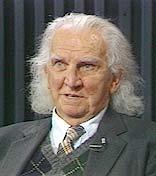
Kenneth E. Boulding
Kenneth E. Boulding

Kenneth E. Boulding was a renowned economist, born on January 18, 1910, and passed away on March 18, 1993. His research in economics covered a wide range of fields, particularly in general systems theory, conflict theory, and peace studies. more

You May Also Like

“It is clear that the building of models is not a purely mechanical process but requires skill of a high order - not merely mathematical skill but a sensitivity to the relative importance of different factors and a critical, almost an artistic, faculty in the selection of behaviour equations which are reasonable, tentative hypotheses in explaining the behaviour of actual economies.”

“One of the most important skills of the economist, therefore, is that of simplification of the model. Two important methods of simplification have been developed by economists. One is the method of partial equilibrium analysis (or microeconomics), generally associated with the name of Alfred Marshall and the other is the method of aggregation (or macro-economics), associated with the name of John Maynard Keynes.”

“Even personal tastes are learned, in the matrix of a culture or a subculture in which we grow up, by very much the same kind of process by which we learn our common values. Purely personal tastes, indeed, can only survive in a culture which tolerates them, that is, which has a common value that private tastes of certain kinds should be allowed.”

“The social dynamics of human history, even more than that of biological evolution, illustrate the fundamental principle of ecological evolution - that everything depends on everything else. The nine elements that we have described in societal evolution of the three families of phenotypes - the phyla of things, organizations and people, the genetic bases in knowledge operating through energy and materials to produce phenotypes, and the three bonding relations of threat, integration and exchange - all interact on each other.”