Quotessence
Home / Quotes / Quote by A. J. Jacobs

Quote by A. J. Jacobs

“The Bible improved my ethical IQ. I started to act like a good person. I tried not to gossip, and lie, and covet, and just by pretending I was a good person, I think I actually became a little bit better of a person. I'm not Gandhi or Angelina Jolie, but it was a baby step.”

Quote by A. J. Jacobs

Author
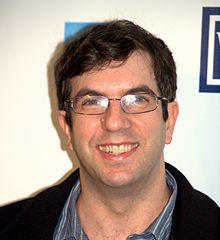
A. J. Jacobs
A. J. Jacobs

A. J. Jacobs is an American journalist and author recognized for his innovative approach to storytelling through self-experimentation. His work often intersects with popular culture, philosophy, and personal growth. Born on March 20, 1968, Jacobs has contributed to various publications and is known for his first book, 'The Know-It-All', which chronicles his year-long quest to read the entire Encyclopaedia Britannica. His books, such as 'The Year of Living Biblically' and 'Drop Dead Healthy', have been critically acclaimed and have reached a wide audience. more

You May Also Like

“It drives me crazy to do readings of my books, because if I read anything I've written in the past, I'd like to almost rewrite everything. If I could, I'd completely rewrite Fargo Rock City, and every sentence would be just slightly different. In all likelihood, most of them wouldn't be any better. Some of them would just be changed back to whatever form they used to be, before I second-guessed myself the first time.”

“The people who review my books, generally, are kind of youngish culture writers who aspire to write books, or write opinion pieces about what they think of Neil Young, or why they quit watching ER or whatever. And because of that, I think there's a lot of people who write about my books with the premise of, "Why this guy? Why not me?"”

“And it's kind of my own fault too, in the sense that I've used my own life as a literary device so much. I think people feel very comfortable reviewing the idea of me, as opposed to what I've actually written. I find that most of the time, when people write about one of my books, they're really just writing about what they think I may or may not represent, as sort of this abstract entity. Is that unfair? Not really. If I put myself in this position where I'm going to kind of weave elements of memoir into almost everything, well, I suppose that's going to happen.”

“The problem a lot of writers have is that they really, really enjoy people saying, "You're brilliant." They let their self-perception be dictated by reader response. But if you're going to let other people make you feel good, you're going to end up feeling bad when they say the opposite. You've got to be a cultural stoic. Then you won't be devastated by people who respond negatively. Of course, the downside is that it sort of stops you from being able to enjoy people liking your work.”

“The amount of response I get, in both a negative and a positive context, is completely related to the amount of books I sell, I think. It seems to have nothing to do with what I'm writing, but what degree of success I'm perceived to have. It's really weird, especially since I spent so much of my life covering people who are famous. It's interesting to actually have it happen to me on some level.”

“I feel like a lot of people involved with celebrity journalism have interesting ideas about the people they want to write about going into the interview. Then as soon as they actually sit down with that person, they basically ask the questions they think journalists are supposed to ask, and they start viewing themselves almost as a peer of the subject. Like they're going to become friends. That's why most celebrity journalism is so terrible.”