Quotessence
Home / Quotes / Quote by Linus Pauling

Quote by Linus Pauling

“There is no area of the world that should not be investigated by scientists. There will always remain some questions that have not been answered. In general, these are the questions that have not yet been posed.”

Quote by Linus Pauling

Author
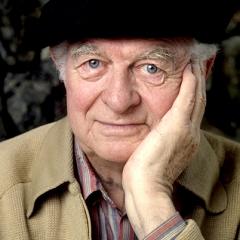
Linus Pauling
Linus Pauling

Linus Pauling was a renowned chemist born on February 28, 1901, in the United States. He made significant contributions to the fields of chemical bonding theory, molecular structure, and quantum chemistry. Pauling was awarded the Nobel Prize in Chemistry in 1954 for his outstanding achievements in chemistry and the Nobel Peace Prize in 1962 for his efforts in the peace movement. more

You May Also Like

“Twice in my life I have spent two weary and scientifically profitless years seeking evidence to corroborate dearly loved hypotheses that later proved to be groundless; times such as these are hard for scientists-days of leaden gray skies bringing with them a miserable sense of oppression and inadequacy.”

“[May] this civic and social landmark [the Washington, D.C., Jewish Community Center] ... be a constant reminder of the inspiring service that has been rendered to civilization by men and women of the Jewish faith. May [visitors] recall the long array of those who have been eminent in statecraft, in science, in literature, in art, in the professions, in business, in finance, in philanthropy and in the spiritual life of the world.”

“Learning is like mercury, one of the most powerful and excellent things in the world in skillful hands; in unskillful, the most mischievous.”

“The chief art of learning, as Locke has observed, is to attempt but little at a time. The widest excursions of the mind are made by short flights frequently repeated; the most lofty fabrics of science are formed by the continued accumulation of single propositions.”

“It seems to me that you are solving a problem which goes beyond the limits of physiology in too simple a way. Physiology has realized its problem with fortitude, breaking man down into endless actions and counteractions and reducing him to a crossing, a vortex of reflex acts. Let it now permit sociology to restore him as a whole. Sociology will wrest man from the anatomical theatre and return him to history.”