Quotessence
Home / Quotes / Quote by Malcolm Forbes

Quote by Malcolm Forbes

Author

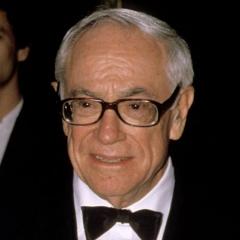
Malcolm Forbes
Malcolm Forbes

Malcolm Forbes was an accomplished publisher, best known for his leadership of Forbes magazine, a globally renowned business and finance publication. Under his tenure, Forbes magazine was transformed into a global brand. more

You May Also Like

“What deep and worthy love is so, whether of woman or child, or art or music. Our caresses, our tender words, our still rapture under the influence of autumn sunsets, or pillared vistas, or calm majestic statues, or Beethoven symphonies all bring with them the consciousness that they are mere waves and ripples in an unfathomable ocean of love and beauty; our emotion in its keenest moment passes from expression into silence, our love at its highest flood rushes beyond its object and loses itself in the sense of divine mystery.”

“[in 1998] I know my political ideas affect what I write but I've tried to follow the facts wherever they land. Every topic I've written about begins as a question. How do police departments behave? Why do bureaucracies function the way they do? What moral intuitions do people have? How do courts make their decisions? What do blacks want from the political system? I can honestly say I didn't know the answers to those questions when I began looking into them.”

“Many Americans have lost confidence in the way our criminal courts assess guilt and innocence. Whatever one thinks of the verdicts, the recent trials of O.J. Simpson, Erik and Lyle Menendez, and various defendants in preschool molestation cases have been lengthy, lawyer-dominated soap operas in which the search for truth has been subordinated to the manipulation of procedures.”

“Police ought to protect communities as well as individuals.... Just as physicians now recognize the importance of fostering health rather than simply treating illness, so the police - and the rest of us - ought to recognize the importance of maintaining, intact, communities without broken windows.”

“The view that we know less than we thought we knew about how to change the human condition came, in time, to be called neoconservatism. Many ... , myself included, disliked the term because we did not think we were conservative, neo or paleo. (I voted for John Kennedy, Lyndon Johnson and Hubert Humphrey and worked in the latter's presidential campaign.) It would have been better if we had been called policy skeptics; that is, people who thought it was hard, though not impossible, to make useful and important changes in public policy.”