Quotessence
Home / Quotes / Quote by Publilius Syrus

Quote by Publilius Syrus

“Humility means accepting reality with no attempt to outsmart it. -David Richo A rolling stone can gather no moss”

Quote by Publilius Syrus

Author
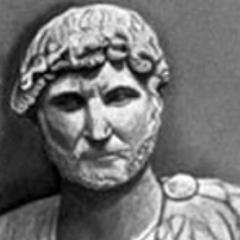
Publilius Syrus
Publilius Syrus

Publilius Syrus was a Roman writer and moralist born around 85 BC in Syria. Originally a slave brought to Rome, he gained his freedom and became a celebrated playwright and author of witty maxims. He was renowned for his mimes (dramatic performances) and his collection of moral sayings, which were widely used in Roman education. Syrus's concise and insightful aphorisms covered topics ranging from ethics to everyday wisdom, making him one of the most influential literary figures of the Roman Republic. He died around 43 BC. more

You May Also Like

“A 1977 poll of American astronomers, published in JSE, showed the following. Out of 2611 questionnaires 1356 were returned. In response to whether the UFO problem deserved further study the replies were: 23% certainly, 30% probably, 27% percent possibly, 17% probably not, 3% certainly not. Interestingly, there was a positive correlation between the amount of reading done on the subject and the opinion that further study was in order.”

“In those same decades, most UFO sightings were made in the daytime and frequently at close range, when shapes and surface features could be distinguished, thus making positive identification of normal sights easier and the descriptions of unusual sights more detailed. When all normal explanations had been eliminated, the witnesses could concentrate on those aspects of the experience which were most abnormal.”

“These abnormal aspects included the shapes of UFOs and their behavior. Most of the UFOs seen in the daytime were said to have had simple geometric shapes-discs, ovals, spheres, cylinders-and surfaces that looked like metal. Such shapes are not only nonexistent among known aircraft, but contrary to all known theories of flight, in most cases offering control and performance disadvantages rather than advantages.”