“We are now forming a republican government. Real liberty is never found in despotism or the extremes of democracy, but in moderate governments.”
Quote by Alexander Hamilton
Work
Jeffersonian principles and Hamiltonian principles: extracts from the writings of Thomas Jefferson and Alexander Hamilton
Compiled from the extensive writings of Thomas Jefferson and Alexander Hamilton, this book offers a comprehensive look into the core political philosophies that shaped the early United States. It includes extracts from their letters, speeches, and essays, providing insight into the contrasting views on governance, economics, and the role of the federal government that defined the early American political landscape. more
Author
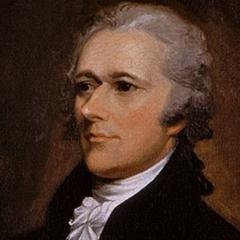
Alexander Hamilton
Alexander Hamilton was a Founding Father of the United States, born on January 11, 1757, and died on July 12, 1804. He played a crucial role in the American Revolutionary War and was instrumental in the drafting of the U.S. Constitution. As the first Secretary of the Treasury, Hamilton promoted fiscal stability and economic growth, establishing the First Bank of the United States and proposing solutions for federal debt. His ideas and policies had a profound impact on the early political and economic development of the United States. more
You May Also Like
Source: The works of Alexander Hamilton: comprising his correspondence, and his political and official writings, exclusive of the Federalist, civil and military. Published from the original manuscripts deposited in the Department of State, by order of the Joint Library Committee of Congress
“Civil liberty is only natural liberty, modified and secured by the sanctions of civil society.”
Source: The Works of Alexander Hamilton: Miscellanies, 1774-1789: A full vindication; The farmer refuted; Quebec bill; Resolutions in Congress; Letters from Phocion; New-York Legislature, etc
“[V]igor of government is essential to the security of liberty.”
Source: The Fœderalist: A Collection of Essays, Written in Favor of the New Constitution, as Agreed Upon by the Fœderal Convention, September 17, 1787. Reprinted from the Original Text. With an Historical Introduction and Notes
Source: The Federalist, on the New Constitution, Written in the Year 1788
Source: The Official and Other Papers ...
“No man in his senses can hesitate in choosing to be free, rather than a slave.”
Source: The Works of Alexander Hamilton: Miscellanies, 1774-1789: A full vindication; The farmer refuted; Quebec bill; Resolutions in Congress; Letters from Phocion; New-York Legislature, etc
Source: The Official and Other Papers ...
Source: The Works of Alexander Hamilton: Miscellanies, 1774-1789: A full vindication; The farmer refuted; Quebec bill; Resolutions in Congress; Letters from Phocion; New-York Legislature, etc