Quotessence
Home / Quotes / Quote by Seneca the Younger

Quote by Seneca the Younger

“How many discoveries are reserved for the ages to come when our memory shall be no more, for this world of ours contains matter for investigation for all generations.”

Quote by Seneca the Younger

Author
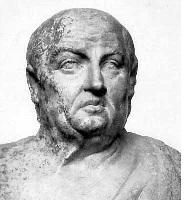
Seneca the Younger
Seneca the Younger

Seneca the Younger (4 BC - 65 AD) was a renowned Roman philosopher, statesman, and playwright. Born into a wealthy Roman family, he served as a government official in the Roman Empire. Seneca's philosophy was deeply influenced by Stoicism, and his works have had a profound impact on later generations. more

You May Also Like

“I happen to have discovered a direct relation between magnetism and light, also electricity and light, and the field it opens is so large and I think rich.”

“If any human being earnestly desire to push on to new discoveries instead of just retaining and using the old; to win victories over Nature as a worker rather than over hostile critics as a disputant; to attain, in fact, clear and demonstrative knowlegde instead of attractive and probable theory; we invite him as a true son of Science to join our ranks.”

“If Watson and I had not discovered the [DNA] structure, instead of being revealed with a flourish it would have trickled out and that its impact would have been far less. For this sort of reason Stent had argued that a scientific discovery is more akin to a work of art than is generally admitted. Style, he argues, is as important as content. I am not completely convinced by this argument, at least in this case.”

“In that memorable year, 1822: Oersted, a Danish physicist, held in his hands a piece of copper wire, joined by its extremities to the two poles of a Volta pile. On his table was a magnetized needle on its pivot, and he suddenly saw (by chance you will say, but chance only favours the mind which is prepared) the needle move and take up a position quite different from the one assigned to it by terrestrial magnetism. A wire carrying an electric current deviates a magnetized needle from its position. That, gentlemen, was the birth of the modern telegraph.”