“Mathematics may be compared to a mill of exquisite workmanship, which grinds you stuff of any degree of fineness; but, nevertheless, what you get out depends upon what you put in; and as the grandest mill in the world will not extract wheat-flour from peascods, so pages of formulae will not get a definite result out of loose data.”
Quote by Thomas Huxley
Author
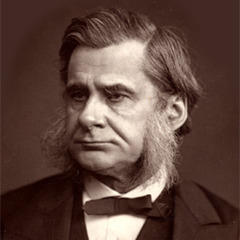
Thomas Huxley
Thomas Huxley, a British biologist, was a staunch supporter of Darwin's theory of evolution. Renowned for his research in comparative anatomy, embryology, paleontology, and philosophy, Huxley made significant contributions to the field of biology. He had a profound influence on science, not only through his support of Darwin's theory of evolution but also through his role as a science popularizer and advocate for science education. more
You May Also Like
Source: The Essential Gilbert K. Chesterton
“Only mathematics and mathematical logic can say as little as the physicist means to say.”
Source: The basic writings of Bertrand Russell, 1903-1959
Source: A Mathematician's Apology
Source: Mysticism and Logic
Source: Seven Lectures on Shakespeare and Milton: A List of All the Ms. Emendations in Mr. Collier's Folio, 1632