Quotessence
Home / Quotes / Quote by G. H. Hardy

Quote by G. H. Hardy

“Reductio ad absurdum, which Euclid loved so much, is one of a mathematician's finest weapons. It is a far finer gambit than any chess play: a chess player may offer the sacrifice of a pawn or even a piece, but a mathematician offers the game.”

Quote by G. H. Hardy

Work

A Mathematician's Apology

This work delves into the essence of mathematics, discussing its purpose, the motivations of mathematicians, and the significance of mathematical inquiry. The author reflects on the challenges and rewards of a life dedicated to mathematics, offering insights into the intellectual and personal aspects of the field. more

Author
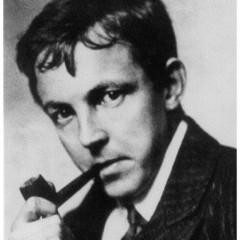
G. H. Hardy
G. H. Hardy

G. H. Hardy was a renowned British mathematician known for his contributions to number theory and mathematical analysis. Born on February 7, 1877, he passed away on December 1, 1947. Hardy is respected for his unique mathematical style and profound insights into mathematical problems. more

You May Also Like

“Some mathematics problems look simple, and you try them for a year or so, and then you try them for a hundred years, and it turns out that they're extremely hard to solve. There's no reason why these problems shouldn't be easy, and yet they turn out to be extremely intricate. Fermat's Last Theorem is the most beautiful example of this.”

“Some persons have contended that mathematics ought to be taught by making the illustrations obvious to the senses. Nothing can be more absurd or injurious: it ought to be our never-ceasing effort to make people think, not feel.”

“The Mathematics are Friends to Religion, inasmuch as they charm the Passions, restrain the Impetuosity of the Imagination, and purge the Mind from Error and Prejudice. Vice is Error, Confusion, and false Reasoning; and all Truth is more or less opposite to it. Besides, Mathematical Studies may serve for a pleasant Entertainment for those Hours which young Men are apt to throw away upon their Vices; the Delightfulness of them being such as to make Solitude not only easy, but desirable.”

“The development of mathematics toward greater precision has led, as is well known, to the formalization of large tracts of it, so that one can prove any theorem using nothing but a few mechanical rules... One might therefore conjecture that these axioms and rules of inference are sufficient to decide any mathematical question that can at all be formally expressed in these systems. It will be shown below that this is not the case, that on the contrary there are in the two systems mentioned relatively simple problems in the theory of integers that cannot be decided on the basis of the axioms.”

“The mathematician's patterns, like the painter's or the poet's must be beautiful; the ideas, like the colours or the words must fit together in a harmonious way. Beauty is the first test: there is no permanent place in the world for ugly mathematics.”