Quotessence
Home / Quotes / Quote by Annalee Newitz

Quote by Annalee Newitz

“The fact that we have been able to perturb the carbon cycle with our industrial revolution is evidence of how vulnerable we are - because when we destroy our environments, we destroy our food and energy supplies. In short, we destroy ourselves.”

Quote by Annalee Newitz

Author
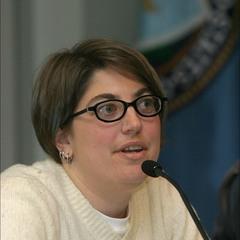
Annalee Newitz
Annalee Newitz

Annalee Newitz is an accomplished journalist and writer, born in 1969. She is renowned for her in-depth reporting on technology, science fiction, and gender issues. Newitz has served as an editor for 'Make' magazine and has authored several books on technology and culture. more

You May Also Like

“With enough money and international coordination, we can push incoming asteroids out of Earth's path. We might even be able to bring back extinct animals in the lab. The problem really isn't scientific - it's cultural. We aren't yet able to coordinate ourselves as a global civilization to do something simple like bring food to a famine-stricken region. We can actually use current satellite technologies to predict where famine will strike next, but we can't get food there - usually for political reasons.”

“My first goal would be to reduce the perturbation in the carbon cycle. That would mean using carbon neutral sources of energy, and changing our agricultural practices to be less disruptive and polluting. I'm not talking about a policy here so much as changing the way our infrastructure works. That's why I'm so fascinated with changing the way we build cities, because they are the most developed forms of physical infrastructure for human habitation.”

“Cities should function more like ecosystems, or even metabolisms. When we build, we should be thinking about how we can integrate into the ecosystems around us, but without sacrificing all the niceties of civilization like good restaurants, concert halls, and high-speed Internet access. I'm saying that partly tongue-in-cheek, but I'm also deadly serious. The future of technology is sustainable ecology.”