Quotessence
Home / Quotes / Quote by George Carlin

Quote by George Carlin

Work

Napalm & Silly Putty

This book features a series of short stories that blend dark humor with fantastical elements, creating a unique and often absurd narrative style. more
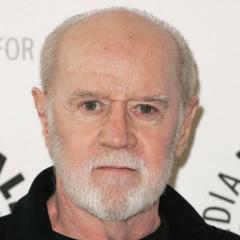
Author

George Carlin
George Carlin

George Carlin, born on May 12, 1937, in New York, USA, was a renowned American comedian, writer, and actor. His career began in the 1960s, and he became famous for his unique sense of humor and insightful observations on social phenomena. Carlin was known for his sharp wit and satirical take on politics, religion, language, and culture, often sparking controversy but also winning widespread acclaim. more

You May Also Like

“I don't know what this great thing I'm meant to be doing is, and it looks to me as if I was supposed not to know. And I resent that, right? "The old me knew. The old me cared. Fine, so far so good. Except that the old me cared so much that he actually got inside his own brain--my own brain--and locked off the bits that knew and cared, because if I knew and cared I wouldn't be able to do it. [...] "But this former self of mine killed himself off, didn't he, by changing my brain? Okay, that was his choice. This new me has its own choices to make, and by a strange coincidence those choices involve not knowing and not caring about this big number, whatever it is. That's what he wanted, that's what he got. "Except this old self of mine tired to leave himself in control, leaving orders for me in the bit of my brain he locked off. Well, I don't want to know, and I don't want to hear them. That's my choice. I'm not going to be anybody's puppet, particularly not my own. [...] "The old me is dead! [...] Killed himself! The dead shouldn't hang about trying t0 interfere with the living.”

“When we strike a balance between the challenge of an activity and our skill at performing it, when the rhythm of the work itself feels in sync with our pulse, when we know that what we're doing matters, we can get totally absorbed in our task. That is happiness. The life coach Martha Beck asks new potential clients, "Is there anything you do regularly that makes you forget what time it is?" That forgetting -- that pure absorption -- is what the psychologist Mihaly Csikzentmihalyi calls "flow" or optimal experience. In an interview with Wired magazine, he described flow as "being completely involved in an activity for its own sake. The ego falls away. Time flies. Every action, movement and thought follows inevitably from the previous one, like playing jazz. Your whole being is involved, and you're using your skills to the utmost." In a typical day that teeters between anxiety and boredom, flow experiences are those flashes of intense living -- bright against the dull. These optimal experiences can happen when we're engaged in work paid and unpaid, in sports, in music, in art. The researchers Maria Allison and Margaret Duncan have studied the role of flow in women's lives and looked at factors that contributed to what they call "antiflow." Antiflow was associated with repetitive household tasks, repetitive tasks at work, unchallenging tasks, and work we see as meaningless. But there's an element of chaos when it comes to flow. Even if we're doing meaningful and challenging work, that sense of total absoprtion can elude us. We might get completely and beautifully lost in something today, and, try as we might to re-create the same conditions tomorrow, our task might jsut feel like, well, work. In A Life of One's Own, Marion Milner described her effort to re-create teh conditions of her own recorded moments of happiness, saying, "Often when I felt certain that I had discovered the little mental act which produced the change I walked on air, exulting that I had found the key to my garden of delight and could slip through the door whenever I wished. But most often when I came again the place seemed different, the door overgrown with thorns and my key stuck in the lock. It was as if the first time I had said 'abracadabra' the door had opened, but the next time I must use a different word. (123-124).”

“The latent abundance of your inner most resources matters less. What matter most is the impact you can make with your inner resources and the distinctive footprints you can leave with what is within you. The excuse not to dare is there for everybody. When you see so many people crowded at the entrance, think of the roofing and if the roofing is too high, think of the next door and if the next door is not penetrable, create a door within the wall.”