Quotessence
Home / Quotes / Quote by Edward Gibbon

Quote by Edward Gibbon

Work

The History of the Decline and Fall of the Roman Empire

This seminal work provides an in-depth exploration of the political, social, and economic factors that contributed to the fall of one of the greatest empires in history. more

Author
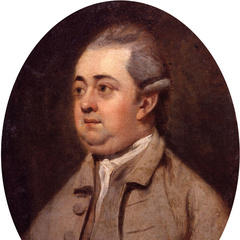
Edward Gibbon
Edward Gibbon

Edward Gibbon was an English historian renowned for his magnum opus, 'The History of the Decline and Fall of the Roman Empire'. His work has had a profound impact on historical studies. more

You May Also Like

“The most successful of the Tartar princes assumed the military command, to which he was entitled by the superiority either of merit or of power. He was raised to the throne by the acclamations of his equals; and the title of Khan expresses, in the language of the North of Asia, the full extent of the regal dignity. The right of hereditary succession was long confined to the blood of the founder of the monarchy; and at this moment all the Khans, who reign from Crimea to the wall of China, are the lineal descendants of the renowned Zingis.”

“The mixture of Sarmatic and German blood had contributed to improve the features of the Alani, to whiten their swarthy complexions, and to tinge their hair with a yellowish cast, which is seldom found in the Tartar race.”

“The emperor of the East was no longer guided by the wisdom and authority of his elder brother, whose death happened towards the end of the preceding year: and, as the distressful situation of the Goths required an instant and peremptory decision, he was deprived of the favourite resource of feeble and timid minds; who consider the use of dilatory and ambiguous measures as the most admirable efforts of consummate prudence.”

“As long as the same passions and interests subsist among mankind, the questions of war and peace, of justice and policy, which were debated in the councils of antiquity, will frequently present themselves as the subject of modern deliberation.”

“The Romans, who so coolly and so concisely mention the acts of justice which were exercised by the legions, reserve their compassion and their eloquence for their own sufferings, when the provinces were invaded and desolated by the arms of the successful Barbarians.”

“The simple circumstantial narrative (did such a narrative exist) of the ruin of a single town, of the misfortunes of a single family, might exhibit an interesting and instructive picture of human manners; but the tedious repetition of vague and declamatory complaints would fatigue the attention of the most patient reader.”

“Constantinople was the principal seat and fortress of Arianism; and, in a long interval of forty years, the faith of the princes and prelates who reigned in the capital of the East was rejected in the purer schools of Rome and Alexandria.”

“The archiepiscopal throne of Macedonius, which had been polluted with so much Christian blood, was successively filled by Eudoxus and Damophilus. Their diocese enjoyed a free importation of vice and error from every province of the empire; the eager pursuit of religious controversy afforded a new occupation to the busy idleness of the metropolis: and we may credit the assertion of an intelligent observer, who describes, with some pleasantry, the effects of their loquacious zeal.”

“The orator, who may be silent without danger, may praise without difficulty and without reluctance; and posterity will confess that the character of Theodosius might furnish the subject of a sincere and ample panegyric. The wisdom of his laws and the success of his arms rendered his administration respectable in the eyes both of his subjects and of his enemies. He loved and practised the virtues of domestic life, which seldom hold their residence in the palaces of kings.”