Quotessence
Home / Quotes / Quote by Edward Gibbon

Quote by Edward Gibbon

Work

The History of the Decline and Fall of the Roman Empire

This seminal work provides an in-depth exploration of the political, social, and economic factors that contributed to the fall of one of the greatest empires in history. more

Author
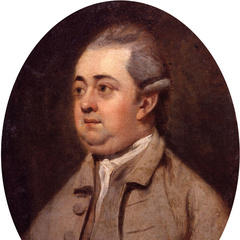
Edward Gibbon
Edward Gibbon

Edward Gibbon was an English historian renowned for his magnum opus, 'The History of the Decline and Fall of the Roman Empire'. His work has had a profound impact on historical studies. more

You May Also Like

“His sumptuous tents, and those of his satraps, afforded an immense booty to the conqueror; and an incident is mentioned which proves the rustic but martial ignorance of the legions in the elegant superfluities of life. A bag of shining leather, filled with pearls, fell into the hands of a private soldier; he carefully preserved the bag, but he threw away its contents, judging that whatever was of no use could not possibly be of any value.”

“The knowledge that is suited to our situation and powers, the whole compass of moral, natural, and mathematical science, was neglected by the new Platonists; whilst they exhausted their strength in the verbal disputes of metaphysics, attempted to explore the secrets of the invisible world, and studied to reconcile Aristotle with Plato, on subjects of which both these philosophers were as ignorant as the rest of mankind.”

“There are two very natural propensities which we may distinguish in the most virtuous and liberal dispositions, the love of pleasure and the love of action. If the former is refined by art and learning, improved by the charms of social intercourse, and corrected by a just regard to economy, to health, and to reputation, it is productive of the greatest part of the happiness of private life.”

“The love of action is a principle of a much stronger and more doubtful nature. It often leads to anger, to ambition, and to revenge; but when it is guided by the sense of propriety and benevolence, it becomes the parent of every virtue, and, if those virtues are accompanied with equal abilities, a family, a state, or an empire may be indebted for their safety and prosperity to the undaunted courage of a single man.”

“To the love of pleasure we may therefore ascribe most of the agreeable, to the love of action we may attribute most of the useful and respectable, qualifications. The character in which both the one and the other should be united and harmonised would seem to constitute the most perfect idea of human nature.”