Quotessence
Home / Quotes / Quote by Edward Gibbon

Quote by Edward Gibbon

“To the love of pleasure we may therefore ascribe most of the agreeable, to the love of action we may attribute most of the useful and respectable, qualifications. The character in which both the one and the other should be united and harmonised would seem to constitute the most perfect idea of human nature.”

Quote by Edward Gibbon

Work

The History of the Decline and Fall of the Roman Empire

This seminal work provides an in-depth exploration of the political, social, and economic factors that contributed to the fall of one of the greatest empires in history. more

Author
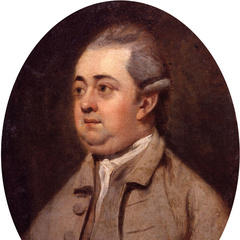
Edward Gibbon
Edward Gibbon

Edward Gibbon was an English historian renowned for his magnum opus, 'The History of the Decline and Fall of the Roman Empire'. His work has had a profound impact on historical studies. more

You May Also Like

“In their censures of luxury the fathers are extremely minute and circumstantial; and among the various articles which excite their pious indignation, we may enumerate false hair, garments of any colour except white, instruments of music, vases of gold or silver, downy pillows, white bread, foreign wines, public salutations, the use of warm baths, and the practice of shaving the beard, which, according to Tertullian, is a lie against our own faces, and am impious attempt to improve the works of the Creator.”

“The chaste severity of the fathers in whatever related to the commerce of the two sexes flowed from the same principle -- their abhorrence of every enjoyment which might gratify the sensual and degrade the spiritual nature of man. It was their favourite opinion, that if Adam had preserved his obedience to the Creator, he would have lived for ever in a state of virgin purity, and that some harmless mode of vegetation might have peopled paradise with a race of innocent and immortal beings.”

“It was with the utmost difficulty that ancient Rome could support the institution of six vestals; but the primitive church was filled with a great number of persons of either sex who had devoted themselves to the profession of perpetual chastity.”

“It is incumbent on us diligently to remember that the kingdom of heaven was promised to the poor in spirit, and that minds afflicted by calamity and the contempt of mankind cheerfully listen to the divine promise of future happiness; while, on the contrary, the fortunate are satisfied with the possession of this world; and the wise abuse in doubt and dispute their vain superiority of reason and knowledge.”

“We stand in need of such reflections to comfort us for the loss of some illustrious characters, which in our eyes might have seemed the most worthy of the heavenly present. The names of Seneca, of the elder and the younger Pliny, of Tacitus, of Plutarch, of Galen, of the slave Epictetus, and of the emperor Marcus Antoninus, adorn the age in which they flourished, and exalt the dignity of human natures.”

“But how shall we excuse the supine inattention of the Pagan and philosophic world to those evidences which were presented by the hand of Omnipotence, not to their reason, but to their senses? During the age of Christ, of his apostles, and their first disciples, the doctrine which they preached was confirmed by innumerable prodigies. The lame walked, the blind saw, the sick were healed, the dead were raised, daemons were expelled, and the laws of Nature were frequently suspended for the benefit of the church.”

“But the sages of Greece and Rome turned aside from the awful spectacle, and, pursuing the ordinary occupations of life and study, appeared unconscious of any alterations in the moral of physical government of the world.”