Quotessence
Home / Quotes / Quote by Charles Kettering

Quote by Charles Kettering

“I could do nothing without my problems; they toughen my mind. In fact, I tell my assistants not to bring me their successes for they weaken me, but rather to bring me their problems, for they strengthen me.”

Quote by Charles Kettering

Author
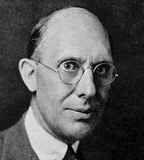
Charles Kettering
Charles Kettering

Charles Kettering, born on August 29, 1876 and died on November 25, 1958, was an American inventor and engineer renowned for his innovations in the automotive and electrical industries. more

You May Also Like

“It is impressive to see a person who has been battered by life in many ways, who is torn by a variety of unsolved problems, who may be alienated from many aspects of the self-but who is still fighting, still struggling, still striving to find the path to a fulfilling existence, moved by the wisdom of knowing, "I am more than my problems."”

“Often a successful problem-solver is one who creates a new context in which to view the problem. This can often be done by directing one's attention away from the distracting details of the difficulty. From a detached perspective, we may examine the situation in a new or different light and, after exploring information and options, choose an appropriate course of action.”

“Those who in this world have the courage to try and solve in their own lives new problems of life, are the ones who raise society to greatness.”

“There is yet no ethic dealing with man's relation to land and to the animals and plants which grow upon it. Land, like Odysseus' slave-girls, is still property. The land-relation is still strictly economic, entailing privileges but not obligations.”

“It is inconceivable to me that an ethical relation to land can exist without love, respect, and admiration for land, and a high regard for its value. By value, I of course mean something far broader than mere economic value; I mean value in the philosophical sense.”

“Each hamlet or village or town should be a place, its own place. This is not a matter of fake historicism or artsy-craftsy architecture. It is a matter of respect for things existing, subtle patterns of place woven from vistas and street widths and the siting and color and scale of stores, houses, and trees... If the countryside is to prosper, it must be different from city or suburb... The difference is in part the simple business of containing our towns and giving them boundaries.”