“Censure is willingly indulged, because it always implies some superiority: men please themselves with imagining that they have made a deeper search, or wider survey than others, and detected faults and follies which escape vulgar observation.”
Quote by Samuel Johnson
Work
The Rambler: A Periodical Paper, Published in 1750, 1751, 1752
The Rambler is a series of periodical papers that were published in three separate volumes, spanning the years 1750, 1751, and 1752. Each volume consists of a variety of essays and articles, covering a range of topics including social issues, literature, and philosophy. The work is notable for its contribution to the development of the essay form and its influence on subsequent literary works. more
Author
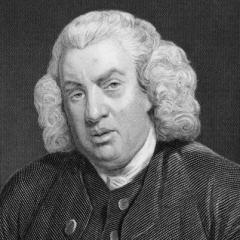
Samuel Johnson
Samuel Johnson was an English writer, poet, and lexicographer, renowned for his comprehensive English dictionary, 'A Dictionary of the English Language', published in 1755. His distinctive writing style and wit have cemented his place as a significant figure in the history of English literature. more
You May Also Like
Source: The Works of Samuel Johnson, LL.D.: With An Essay on His Life and Genius
“Few things are so liberally bestowed, or squandered with so little effect, as good advice.”
Source: The Wisdom of the Rambler, Adventurer, and Idler
Source: The Rambler: In Four Volumes
Source: Murphy's essay. The rambler. The adventurer. The idler. Rasselas. Tales of the imagination. Letters. Irene. Miscellaneous poems
Source: The works of Samuel Johnson
Source: The Rambler: A Periodical Paper, Published in 1750, 1751, 1752
Source: The Works of Samuel Johnson, L. L. D.: In Twelve Volumes
“No man tells his opinion so freely as when he imagines it received with implicit veneration.”
Source: The Rambler: In Four Volumes
Source: The works of Samuel Johnson