Quotessence
Home / Quotes / Quote by Samuel Johnson

Quote by Samuel Johnson

“If we consider the manner in which those who assume the office of directing the conduct of others execute their undertaking, it will not be very wonderful that their labours, however zealous or affectionate, are frequently useless. For what is the advice that is commonly given? A few general maxims, enforced with vehemence, and inculcated with importunity, but failing for want of particular reference and immediate application.”

Quote by Samuel Johnson

Work

Murphy's essay. The rambler. The adventurer. The idler. Rasselas. Tales of the imagination. Letters. Irene. Miscellaneous poems

This compilation includes a diverse range of writings, featuring personal essays, accounts of adventures and idleness, philosophical reflections, imaginative tales, correspondence, and a selection of poems. more

Author
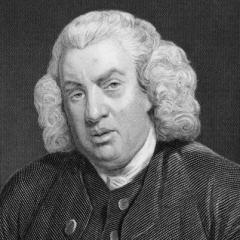
Samuel Johnson
Samuel Johnson

Samuel Johnson was an English writer, poet, and lexicographer, renowned for his comprehensive English dictionary, 'A Dictionary of the English Language', published in 1755. His distinctive writing style and wit have cemented his place as a significant figure in the history of English literature. more

You May Also Like

“Advice, as it always gives a temporary appearance of superiority, can never be very grateful, even when it is most necessary or most judicious. But for the same reason everyone is eager to instruct his neighbours. To be wise or to be virtuous is to buy dignity and importance at a high price; but when nothing is necessary to elevation but detection of the follies or faults of others, no man is so insensible to the voice of fame as to linger on the ground.”

“Vanity is so frequently the apparent motive of advice that we, for the most part, summon our powers to oppose it without very accurate inquiry whether it is right. It is sufficient that another is growing great in his own eyes at our expense, and assumes authority over us without our permission; for many would contentedly suffer the consequences of their own mistakes, rather than the insolence of him who triumphs as their deliverer.”

“Advice is offensive, not because it lays us open to unexpected regret, or convicts us of any fault which had escaped our notice, but because it shows us that we are known to others as well as to ourselves; and the officious monitor is persecuted with hatred, not because his accusation is false, but because he assumes that superiority which we are not willing to grant him, and has dared to detect what we desired to conceal.”

“That there is something in advice very useful and salutary, seems to be equally confessed on all hands; since even those that reject it, allow for the most part that rejection to be wrong, but charge the fault upon the unskilful manner in which it is given; they admit the efficacy of the medicine, but abhor the nauseousness of the vehicle.”

“The desire of advising has a very extensive prevalence; and, since advice cannot be given but to those that will hear it, a patient listener is necessary to the accommodation of all those who desire to be confirmed in the opinion of their own wisdom: a patient listener, however, is not always to be had; the present age, whatever age is present, is so vitiated and disordered, that young people are readier to talk than to attend, and good counsel is only thrown away upon those who are full of their own perfections.”

“I've seen people recover physical abilities, yet never get over emotional trauma after a serious accident. I've seen other people overcome the psychological and emotional trauma of a serious illness even though they may never fully regain their physical capabilities. Which is the greater healing? Which is the better recovery? If I had the option of choosing between a mediocre life with eyesight or the life I have today, even though I am blind, I'd stay blind and keep the life I have.”