Quotessence
Home / Quotes / Quote by Sherman Alexie

Quote by Sherman Alexie

Work

The Absolutely True Diary of a Part-Time Indian

This novel is a candid and humorous account of a teenager's journey as he navigates the complexities of his identity and his place in the world. The protagonist, a young Native American, faces the challenges of transitioning from a reservation school to a predominantly white high school, while grappling with his own cultural heritage and the expectations of his family. more

Author
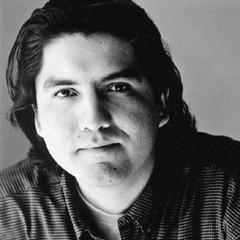
Sherman Alexie
Sherman Alexie

Sherman Alexie is an American poet, writer, and actor, known for his works that reflect the life of Native Americans. He was born on October 7, 1966, and grew up in the Confederated Tribes of the Umatilla Indian Reservation in Rainier, Washington. more

You May Also Like

“John’s adolescence was marked by loss. When he was thirteen his father died, swiftly followed by his two sisters. Shortly after he turned seventeen his eldest brother, James, whose progress through his chosen medics, career had taken him to London, became unable to work due to ill health and returned to the farm, lying for days on one of the beds that pulled out from the walls of the two-roomed cottage like drawers, coughing himself to death at least while John watched or was nearby; and I find it hard to imagine, now, when death is largely hedged about with treatment plans, when it does not often come senseless out of nowhere, but can be postposted, or if not, then at least explained, what grief must have been like when that boundary was a curtain you could put your hand through. It is easy to think that when death could be so quickly turned to, a matter of mistral and all families counted lost children in their numbers, that loss must have been a blunter thing- that having so much practice, they must have been better at it, or inoculated, that it cannot have been for them such devastation, this laying waste- as the birth of a tenth child might be of less account in a busy week than the loss of a pair of, so that the date of it was not looked for until later, when it was found to have been forgotten. It is easy to think that in an age without anaesthetics, when legs might be hacked off on kitchen tables, teeth pulled sigh pliers taking gobbets of jaw and gun away with the , that pain must have been somehow a less precise, less devastating thing, the alternative being unthinkable- that it was just the same but persisting, could only be endured, to universal to allow concession; and so John Hunter watched the bodies of those he loved carried out of the tiny farmhouse one by one, making their last journey to the church, and afterwards he went about the business of his day, he went to school or to the fields, and then at last, summoned by William, the sole surviving brother he barely remembered, he went to London and, did not return.”

“Inside every woman, is a crazy girl. And we all know what I'm talking about. That part of you that is entangled with insecurities, fears, and absolute insanity! The art of femininity lies in the molding, pounding, and defeating of that crazy girl on a daily basis! Look at any woman, and you're looking at a woman fighting a daily battle, wielding her weapons in war, every day! I have said it before and I'll say it again: it is never easy being a woman! And if we could only pound that crazy, insecure girl out of ourselves, it would make such the difference!”

“It was a grand opportunity for the low whites, who had no negroes of their own to scourge. They exulted in such a chance to exercise a little brief authority, and show their subserviency to the slaveholders; not reflecting that the power which trampled on the colored people also kept themselves in poverty, ignorance and moral degradation.”

“How does a hardworking sixty-four-year-old-woman end up without a house or a permanent place to stay, relying on unpredictable low-wage work to survive? Living in a mile-high alpine wilderness, with intermittent snow and maybe mountain lions in a tiny trailer, scrubbing toilets at the mercy of employers who, on a whim, could cut her hours or even fire her? What does the future look like for someone like that?”

“At all times it is a bewildering thing to the poor weaver to see his employer removing from house to house, each one grander than the last, till he ends in building one more magnificent than all, or withdraws his money from the concern, or sells his mill, to buy an estate in the country, while all the time the weaver, who thinks he and his fellows are the real makers of this wealth, is struggling on for bread for his children, through the vicissitudes of lowered wages, short hours, fewer hands employed, etc. And when he knows trade is bad, and could understand (at least partially) that there are not buyers enough in the market to purchase the goods already made, and consequently that there is no demand for more; when he would bear and endure much without complaining, could he also see that his employers were bearing their share; he is, I say, bewildered and (to use his own word) "aggravated" to see that all goes on just as usual with the millowners. Large houses are still occupied, while spinners' and weavers' cottages stand empty, because the families that once filled them are obliged to live in rooms or cellars. Carriages still roll along the streets, concerts are still crowded by subscribers, the shops for expensive luxuries still find daily customers, while the workman loiters away his unemployed time in watching these things, and thinking of the pale, uncomplaining wife at home, and the wailing children asking in vain for enough of food--of the sinking health, of the dying life of those near and dear to him. The contrast is too great. Why should he alone suffer from bad times?”