Quotessence
Home / Quotes / Quote by Hermann Hesse

Quote by Hermann Hesse

“The morning was a wretched time of day for him. He feared it and it never brought him any good. On no morning of his life had he ever been in good spirits nor done any good before midday, nor ever had a happy idea, nor devised any pleasure for himself or others. By degrees during the afternoon he warmed and became alive, and only towards evening, on his good days, was he productive active and sometimes, aglow with joy.”

Quote by Hermann Hesse

Work

Steppenwolf

A complex narrative that delves into themes of identity, alienation, and the human condition more

Author

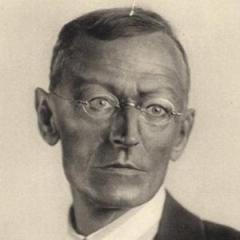
Hermann Hesse
Hermann Hesse

Hermann Hesse was a German poet and novelist, born on July 2, 1877, and died on August 9, 1962. Known for his profound psychological descriptions and exploration of human nature, his works include classics such as 'Steppenwolf' and 'The Glass Bead Game'. more

You May Also Like

“You are a single woman; you intend to remain one. You’ve acquired enough sexual experience to feel you belong to your times. You do not have children; you never intended to. Sustained romantic intensities have not been for you. Your explanation (not an untrue one,though not quite sufficient) is that you have let yourself be shaped by so many conventions, expectations, and requirements (institution’s, people’s), by so much dread of disapproval, that the discipline of solitude—severe solitude—has been required to give you the sense of an independent selfhood. The intensities of friendship suit you better. Friendship’s choreography is for multiple partners: for varied groups and surprisingly sustained duets.”

“In the twentieth century the women who wanted to be on their own were some of the best, the honest ones, those who instinctively rejected the trash. But here came a tragical dilemma. If they accepted Business and served it, they served the very thing from which they fled, and at best became imitation men. If they rejected Business and lived on allowances or incomes, they were in the anomalous position of hunting with the industrial hounds and running with the agricultural hare. An instinctive sense of this made many of them turn "artist." And so Europe was cluttered up with incompetent women "artists" -- not that a woman is incapable of being an artist, but because the assumed role provided an escape. Either situation was impossible, and the solution is not yet found.”

“ماجدوى العقل إذا يارتشارد باركر , ؟ أوظيفته الوحيدة تدبير الأمور العملية فحسب ؟ تأمين الطعام والثياب والمأوى لماذا لا يقدم العقل أجوبة أكبر ؟ ولماذا الأسئلة التي نطرحها تفوق الأجوبة دائماً لماذا الشبكة كبيرة إذا كانت الأسماك قليلة إلى هذا الحد ؟”

“When my mother would tell me that she wanted me to have something because she as a child had never had it, I wanted, or I partly wanted, to give it back. All my life I continued to feel that bliss for me would have to imply my mother's deprivation or sacrifice. I don't think it would have occurred to her what a double emotion I felt. I could hardly bear my pleasure for the guilt. There is no wonder that a passion for independence sprang up in me at the earliest age. It took me a long time to manage the independence, (but) I have never managed to handle the guilt. In the act and the course of writing stories, these are the two springs, one bright, one dark, that feed the stream.”