Quotessence
Home / Quotes / Quote by Richard M. Weaver

Quote by Richard M. Weaver

Work

Ideas Have Consequences: Expanded Edition

This book delves into the profound influence of various philosophical concepts on the development of society and culture, offering an in-depth analysis of their historical and contemporary significance. more

Author
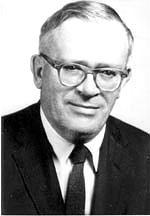
Richard M. Weaver
Richard M. Weaver

Richard M. Weaver was an influential American philosopher, born on March 3, 1910, and died on April 1, 1963. He is known for his profound insights into language, culture, and political philosophy, particularly for his work 'The Language of Art', which explored the nature of language and its relationship to reality. more

You May Also Like

“It has been remarked that when one passes among the patients of the psychiatric ward, he encounters among the several sufferers every aspect of normal personality in morbid exaggeration. ... As one passes through the modern centers of enterprise and of higher learning, he is met with similar autonomies of development. ... The scientist, the technician, the scholar, who have left the One for the Many are puffed up with vanity over their ability to describe precisely some minute portion of the world. Men so obsessed with fragments can no more be reasoned with than other psychotics.”

“Those who are guilty of the argumentum ad ignorantiam profess belief in something because its opposite cannot be proved ... In the realm where "prejudice" is now most an issue, it normally takes a form like this: you cannot prove by the method of statistics and quantitative measurement that men are not equal. Therefore all men are equal. ... You cannot prove again by the methods of science that one culture is higher than another. Therefore the culture of the Digger Indians is just a good as that of Muncie, Indiana, or thirteenth-century France.”

“There are some despotic governments so filled with a feeling of insecurity that they regard the free life of culture as a threat to their existence. ... On the other extreme is the kind of popular government which is so distrustful of all forms of distinction that it sees even in the cultivated individual a menace to its existence. Such states are likely to maintain a pressure which discourages cultural endeavor, although the pressure may be exerted through social channels.”