Quotessence
Home / Quotes / Quote by Richard M. Weaver

Quote by Richard M. Weaver

“Beneath the surface of repartee and mock seriousness, [Plato's Phaedrus] is asking whether we ought to prefer a neuter form of speech to the kind which is ever getting us aroused over things and provoking an expense of spirit.”

Quote by Richard M. Weaver

Work

The Ethics of Rhetoric

This book delves into the philosophical underpinnings of rhetoric, examining how ethical considerations shape the use of persuasive language and communication. more

Author
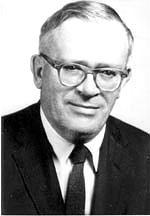
Richard M. Weaver
Richard M. Weaver

Richard M. Weaver was an influential American philosopher, born on March 3, 1910, and died on April 1, 1963. He is known for his profound insights into language, culture, and political philosophy, particularly for his work 'The Language of Art', which explored the nature of language and its relationship to reality. more

You May Also Like

“Those who are guilty of the argumentum ad ignorantiam profess belief in something because its opposite cannot be proved ... In the realm where "prejudice" is now most an issue, it normally takes a form like this: you cannot prove by the method of statistics and quantitative measurement that men are not equal. Therefore all men are equal. ... You cannot prove again by the methods of science that one culture is higher than another. Therefore the culture of the Digger Indians is just a good as that of Muncie, Indiana, or thirteenth-century France.”

“There are some despotic governments so filled with a feeling of insecurity that they regard the free life of culture as a threat to their existence. ... On the other extreme is the kind of popular government which is so distrustful of all forms of distinction that it sees even in the cultivated individual a menace to its existence. Such states are likely to maintain a pressure which discourages cultural endeavor, although the pressure may be exerted through social channels.”

“Many of us who read the literature of social science as laymen are conscious of being admitted at a door which bears the watchword "scientific objectivity" and of emerging at another door which looks out upon a variety of projects for changing, renovating, or revolutionizing society. In consequence, we feel the need of a more explicit account of how the student of society passes from facts to values or statements of policy.”

“The most important thing about the gentleman was that he was an idealist. ... He was bred up to a code of self-restraint which taught resistance to pragmatic temptation. He was definitely a man of sentiment, who refused to put matters on a basis of materialism and self-aggrandizement.”