Quotessence
Home / Quotes / Quote by Richard M. Weaver

Quote by Richard M. Weaver

Work

Ideas Have Consequences: Expanded Edition

This book delves into the profound influence of various philosophical concepts on the development of society and culture, offering an in-depth analysis of their historical and contemporary significance. more

Author
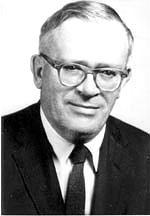
Richard M. Weaver
Richard M. Weaver

Richard M. Weaver was an influential American philosopher, born on March 3, 1910, and died on April 1, 1963. He is known for his profound insights into language, culture, and political philosophy, particularly for his work 'The Language of Art', which explored the nature of language and its relationship to reality. more

You May Also Like

“Many of us who read the literature of social science as laymen are conscious of being admitted at a door which bears the watchword "scientific objectivity" and of emerging at another door which looks out upon a variety of projects for changing, renovating, or revolutionizing society. In consequence, we feel the need of a more explicit account of how the student of society passes from facts to values or statements of policy.”

“The most important thing about the gentleman was that he was an idealist. ... He was bred up to a code of self-restraint which taught resistance to pragmatic temptation. He was definitely a man of sentiment, who refused to put matters on a basis of materialism and self-aggrandizement.”

“A prejudice may be an unreasoned judgment, he [Hibben] pointed out, but an unreasoned judgment is not necessarily an illogical judgment. ... First, there are those judgments whose verification has simply dropped out of memory. ... The second type of unreasoned judgments we hold is the opinions we adopt from others ... The third class of judgments in Professor Hibben's list comprises those which have subconscious origin. The material that furnishes their support does not reach the focal point of consciousness, but psychology insists upon its existence.”

“It may be true that only those minds which are habituated to think logically can safely trust their intuitive conclusions, on the theory that the subconscious level will do its kind of work as faithfully as the conscious does its kind.”

“Education is a process by which the individual is developed into something better than he would have been without it. ... The very though seems in a way the height of presumption. For one thing, it involves the premise that some human beings can be better than others.”